Originally written on June, 30th, 2005.
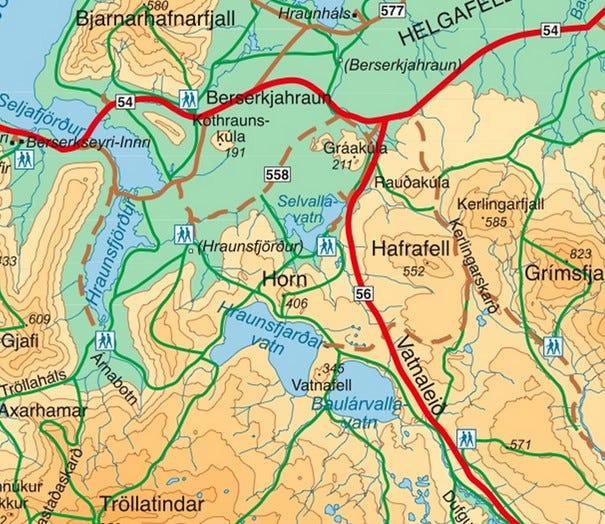
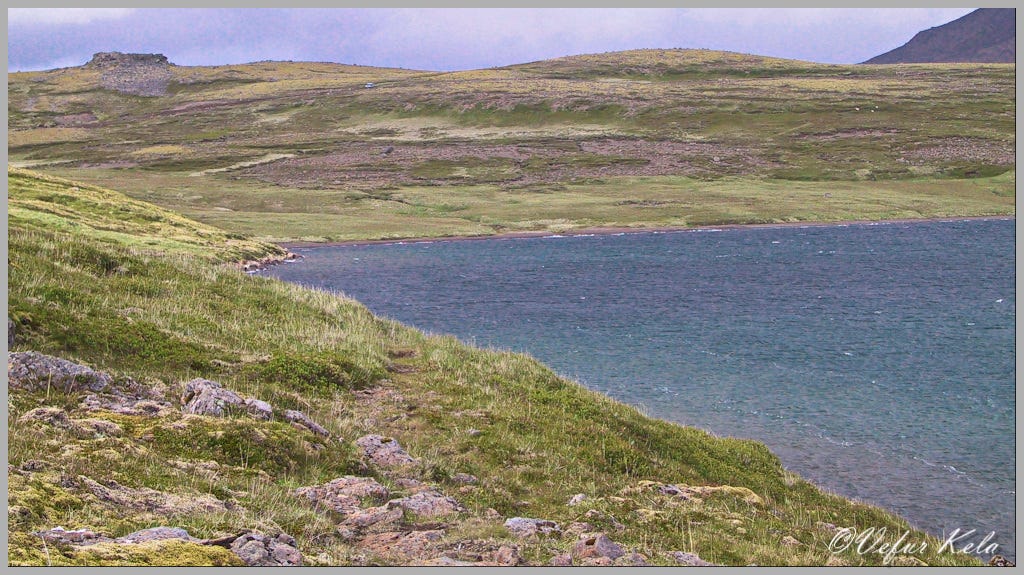
The lakes I am referring to are Baulárvallarvatn, Hraunsfjarðarvatn, Selvallavatn, and Hraunsfjörður. After the construction of the road over Vatnaleið, Baulárvallarvatn and the southwestern part of Hraunsfjarðarvatn became easily accessible for fishing. The volcano Vatnafell separates Baulárvallarvatn and Hraunsfjarðarvatn, and Horn separates Hraunsfjarðarvatn and Selvallavatn. To the southwest of Hraunsfjarðarvatn and Baulárvallarvatn are Tröllatindar, and Hafrafell lies to the east of the lakes. Geologically speaking, the lakes are relatively young. They were formed in a volcanic eruption approximately 120,000 years ago. Both Hraunsfjarðarvatn and Baulárvallarvatn are extremely deep, although their maximum depth is somewhat uncertain due to human damming projects. It is likely that Baulárvallarvatn is around 47 meters deep, and Hraunsfjarðarvatn is no less than 87 meters deep.
Numerous streams flow into Baulárvallarvatn, which are presumably spawning grounds for the trout inhabiting the lake. The rivers flowing into the lake from Vatnfell, clockwise around the lake, are named Rauðsteinalækur, Draugagilsá, Baulá, Moldagilsá, and Vatnalækur. To the south, the river Straumfjarðará flows out of the lake; presumably, this outlet was the largest spawning ground for the trout before it was dammed, but after the dam construction, conditions for trout spawning are unfavorable.
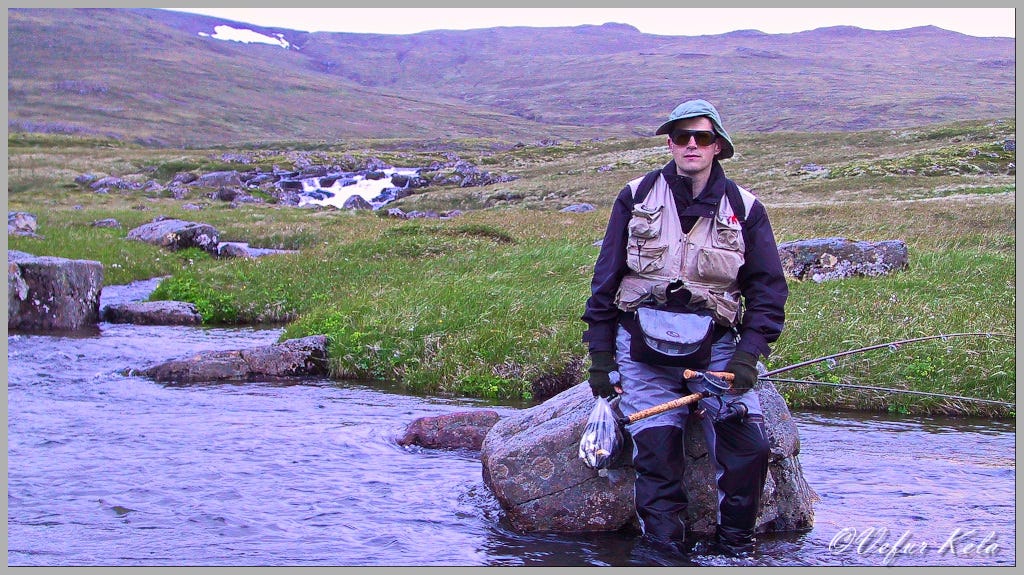
A companion of mine from the Foss Fishing Club and I tried out Baulárvallarvatn just before the turn of the month, June-July, in 2005. We strolled along Vatnafell to Vatnaá and began fishing there. We caught a few small ones there. On the way back, we fished along the shore below Vatnafell. Casting against a stiff southerly wind, we caught some trout that were somewhat larger. However, they did not reach the size purported to be the average weight of fish in the lake, although the trout in Baulárvallarvatn are said to be on the larger side for a lake fish.