
Berlin is a major city by European standards. It is the fifth-largest city in Europe with over three and a half million inhabitants. The city has a history spanning over seven hundred years, making it an extremely interesting city to visit for those interested in the past. Guðrún and I decided to use part of the summer holiday we had saved up to visit the city. Guðrún has been to Berlin before, but this was my first visit. Certainly, there are some magnificent buildings in Berlin, but they are not necessarily old. The reason is the devastation the city suffered in the Second World War, as over seventy percent of it was bombed in air raids in the spring of 1945.
We flew out on a Wednesday morning, landed at Brandenburg Airport around one o’clock, and took the S9 train from Willy Brandt station to Friedrichstrasse station. We walked up to the street, and on the other side was the Eurostar Hotel, where we were staying for the next six nights. It couldn’t have been more convenient, right? Of course, the taxi drivers were standing outside the terminal, trying to lure us into their cars. A trip into town probably costs about 50 euros, but the train ride cost 7 euros for both of us. A nice saving there.
Olympiastadium
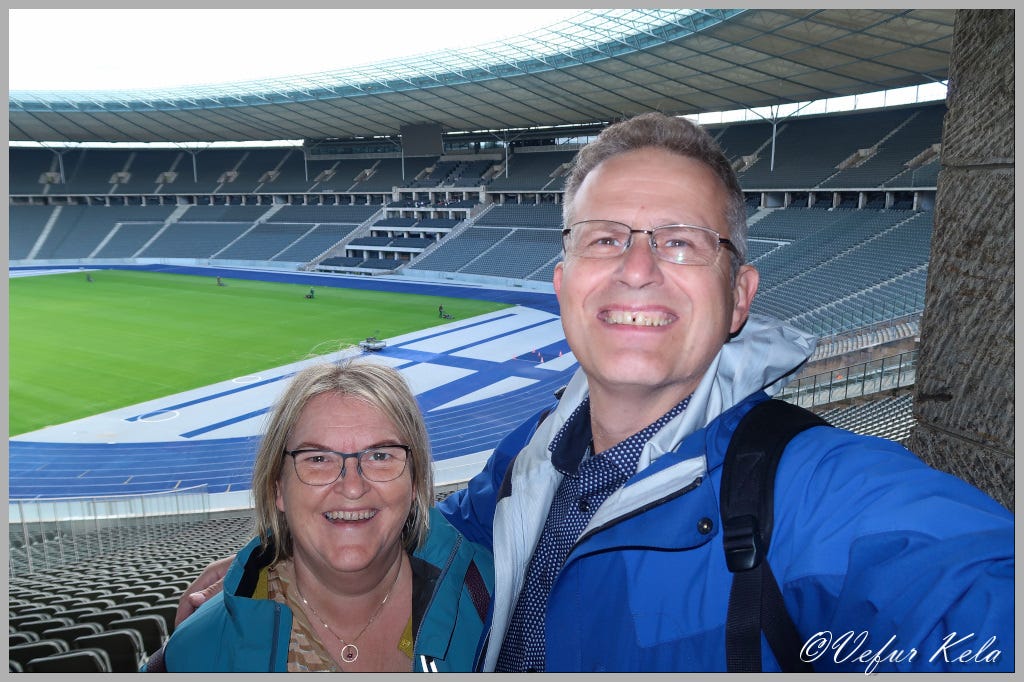
On the first day, we just strolled around the immediate vicinity of the hotel, but the following day we made a trip to the Olympic Stadium and bought a guided tour of it. Originally, there was a racetrack in this area, but the first version of sports facilities was built on the site for the Olympic Games scheduled for 1916. As it turned out, no games took place that year due to the First World War. In 1931, Berlin was awarded the right to host the eleventh Olympic Games, and the Nazis, who came to power in 1933, decided to use the games for propaganda purposes. They had the stadium that stands there today built. The stadium held no less than 110,000 spectators. The Nazis wanted to showcase their power and strength. Today, the stadium has been renovated in line with modern requirements. It now holds nearly 75,000 spectators. The stadium is the home ground of the football team Hertha Berlin. Hertha Berlin rents the stadium for their home games, which is a problem for them. There are plans to build a home stadium for the team in the near future. The stadium is also used for all kinds of larger events, such as concerts. Rammstein last played at the stadium.
Bike Tour
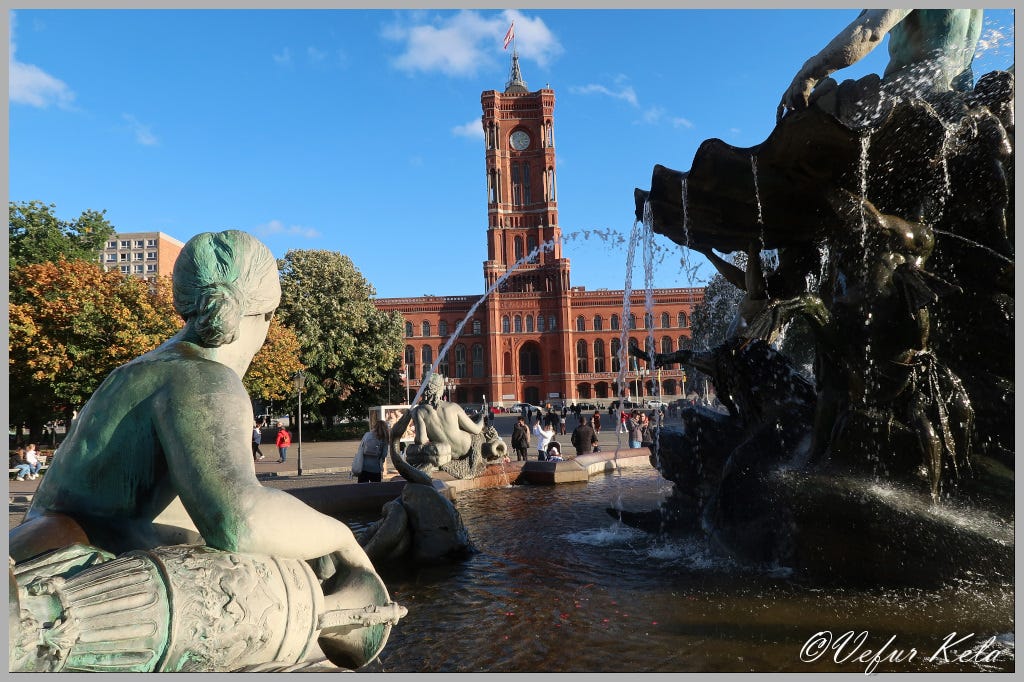
We heard back home in Iceland that it was possible to get an Icelandic-guided tour of the city with “Berlínurnar”. We took the plunge and booked a bike tour and guide for Friday. We rented the bikes at the hotel, as most hotels offer bike rentals. The bike tour was supposed to start at the Neptune Fountain by the Red City Hall. There, we found the guide and the group, which wasn’t really a group. It was actually just us and another couple. Then, we biked to the city’s main landmarks. The bike tour ended in a beer garden, where we naturally had a beer and pizza. Cycling around Berlin proved to be much more comfortable than we expected. You just have to be careful not to put your tires into the tracks where the trams run. The traffic was not a problem at all, and frankly, we didn’t think it was particularly heavy. We have seen much worse in other big cities.
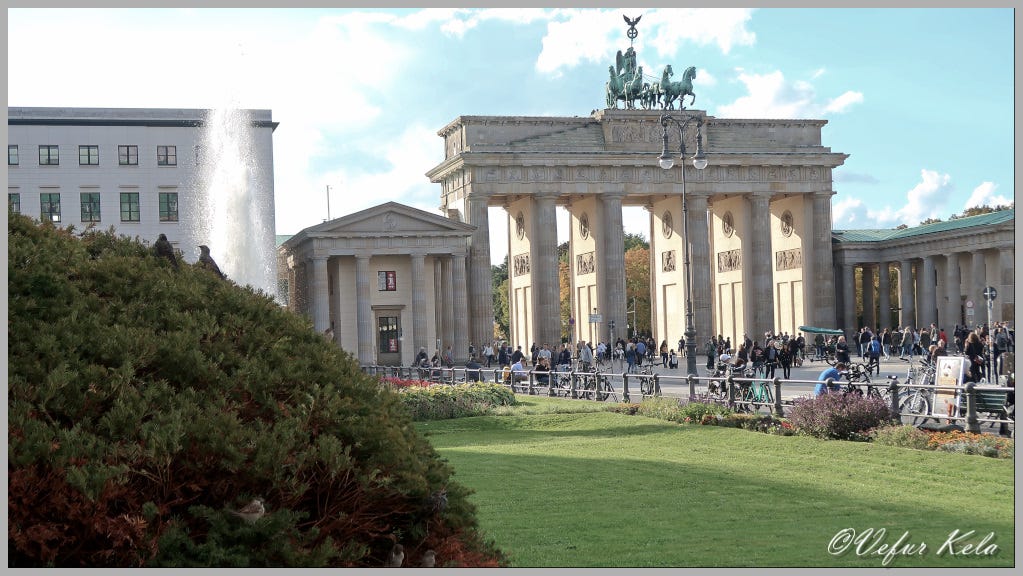
Probably the Brandenburg Gate is the best-known landmark of the city of Berlin. About a hundred years before the gate was built, Berlin was surrounded by a fortress wall, and only a few gates allowed access to the town. At that time, Berlin was a town rather than a city. The Brandenburg Gate was not one of these city gates. Around 1730, the entrances into town were increased, as Berlin was on its way to becoming a city. The gates then numbered eighteen and served the function of toll gates. One of them was the Brandenburg Gate. The gate takes its name from the city of Brandenburg an der Havel, as the gate marked the beginning of the route from Berlin to that city. Between 1788 and 1791, Friedrich Wilhelm II oversaw the construction of the gate as we know it today, with the goddess of victory, Victoria, on top.
The Central Station
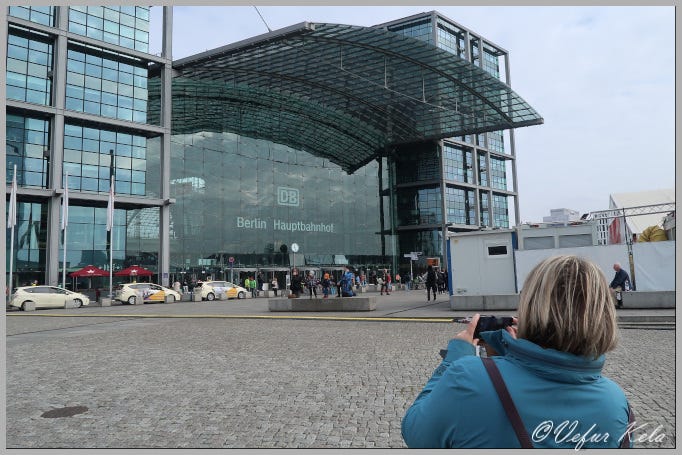
The old station building was demolished in 2002 despite being a listed building, and this new station was built in its place. Guðrún and I found Berlin Central Station impressive. It wasn’t the architecture that charmed us, as the station is a massive, modern glass building. The station was opened in 2006, and it was really its size that captivated us. We Icelanders have no comparable transport hub. Berlin – Hauptbahnhof was built between 2002 and 2006 on the site of a former transport hub called Lehrter Stadtbahnhof.
Lehrter Stadtbahnhof was opened in 1882 and initially served transport to and from the city. Around 1930, it also began serving as a transport hub for travel within the city. When the city was divided into East and West, its importance diminished significantly because the next station was Friedrichstrasse station, which was in East Berlin. When the wall was built, the station’s importance decreased even further. When the wall later fell, the station’s importance increased again.
The Television Tower
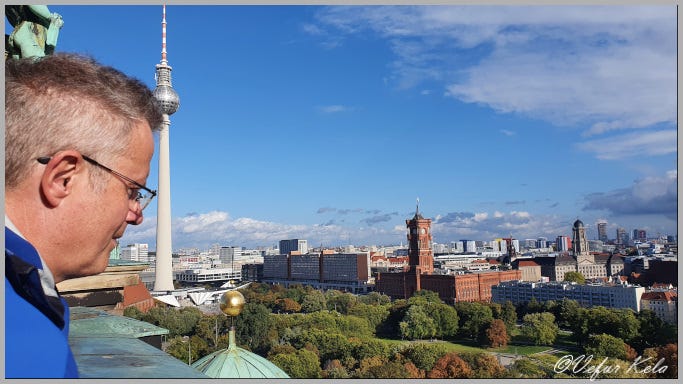
The Fernsehturm, or television tower, is one of Berlin’s landmarks, being the fourth-tallest structure in Europe at a full 368 meters. It is possible to go up the tower and enjoy a magnificent view over Berlin. It wouldn’t be a bad idea to book a table at the restaurant at the very top of the tower, spinning circle after circle while enjoying both the view and the food. We, the couple, did neither. When the sun shines on the tower, the shadows are cast on the curved glass sphere in such a way that a cross appears to form on it. Berliners say this is the Pope’s revenge in Rome for the treatment Christianity received east of the Iron Curtain.
The Cathedral
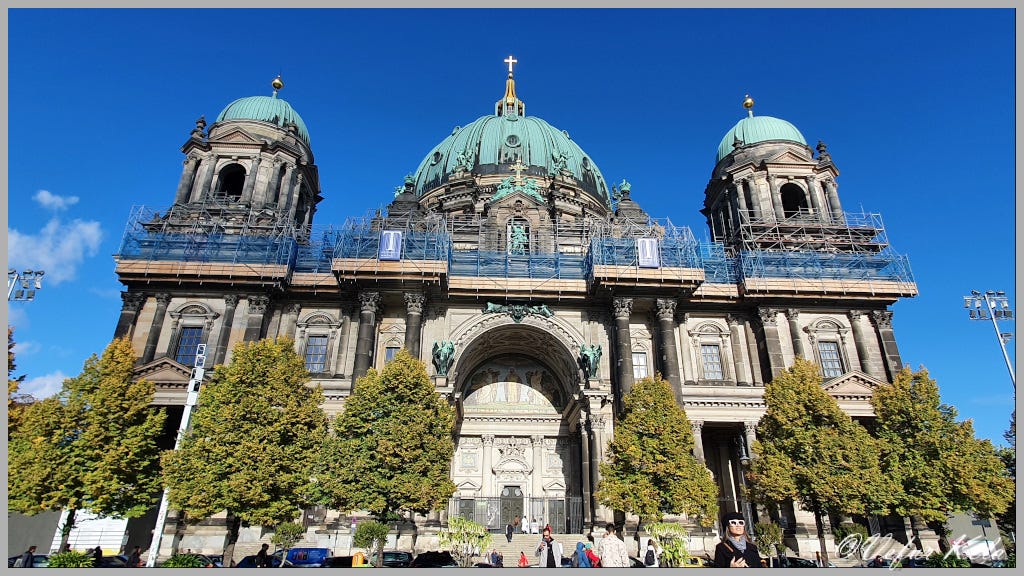
There is no German city that does not boast a magnificent church. Berlin Cathedral is located on Museum Island in the middle of Berlin. A church has stood there since Frederick Iron Tooth had a church built connected to the palace in Berlin in 1451. The church that stands there today was consecrated in 1905. It is a massive structure and was intended to be the Lutheran church that could serve as a counterweight to St. Peter’s Basilica in Rome. Upon entering, it is the dome that attracts the most attention, along with the paintings on it. One does not realize that each painting is over ninety square meters in size, as the church is 116 meters high. Guðrún and I made the effort to scramble up the stairs to the dome to enjoy the view over the city. Although our heart rates took a decent leap from this stair-climbing, it was worth it. Underneath the church is a crypt worth exploring, but we were not allowed to go down there due to some renovations that were being made.
War Relics and Monuments
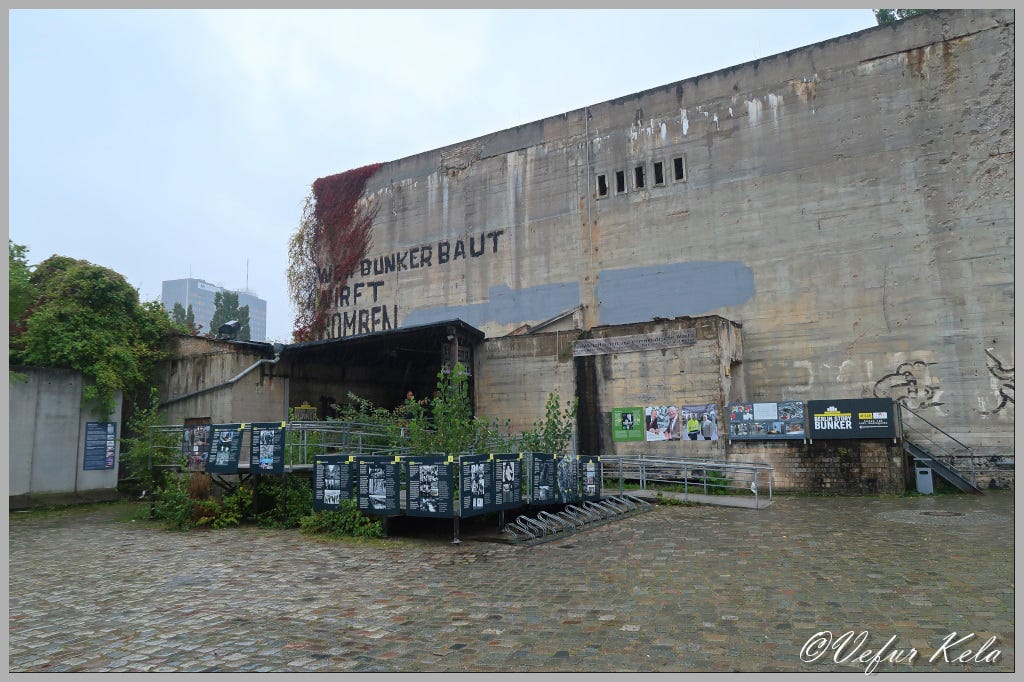
It is impossible not to think about the tragedy of the Second World War when visiting Berlin. We were pleased to see that the Germans are not hiding that sad history, and they seem to emphasize the events that serve as a warning rather than the war story itself. For example, they choose not to show the bunker where Hitler spent his last days. There is just a lame parking lot there. By doing this, they prevent modern-day Nazis from turning the place into a holy site for pilgrimages. Instead, they show Hitler’s history in another minor bunker that does not look like much, but they make more of a monument to the Holocaust.
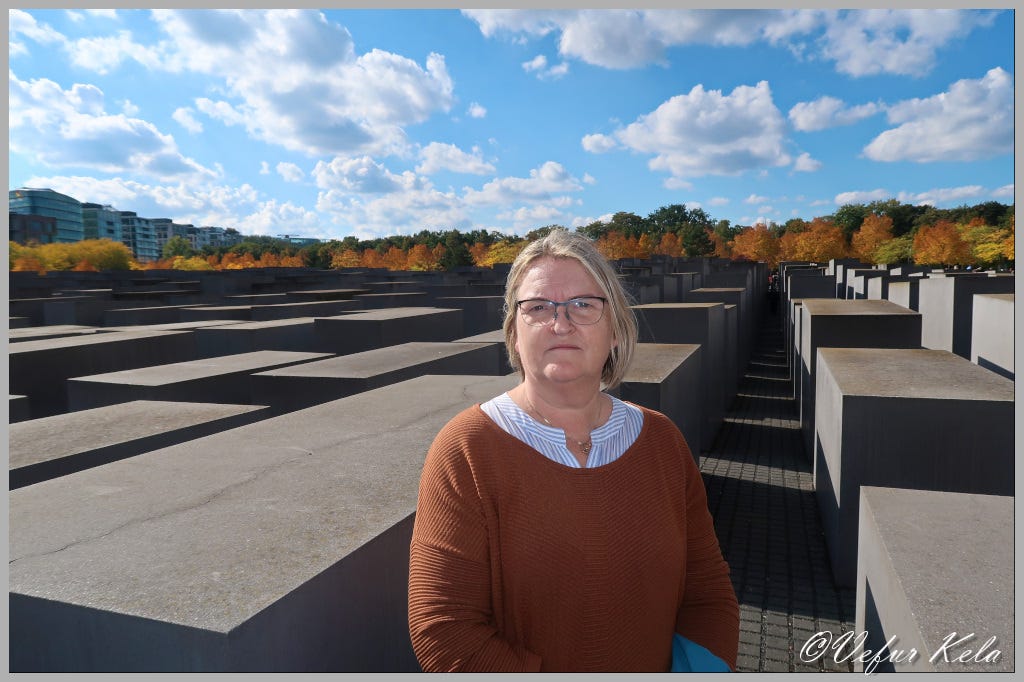
The Holocaust memorial occupies about nineteen thousand square meters of valuable land in the middle of Berlin. This has certainly sparked controversy in Berlin, but the memorial stands there and is impactful. It was built in 1999 according to the design of American architect Peter Eisenman. What can be read into the design is up to each individual, as the designer himself has never revealed what he was thinking.
Reichstag and the Red City Hall
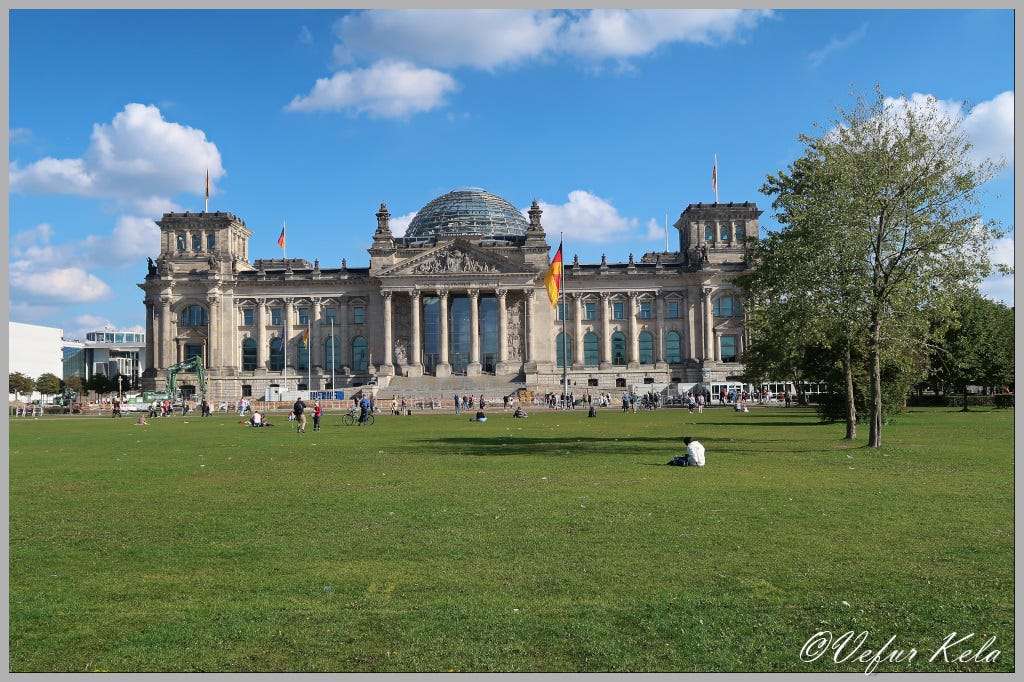
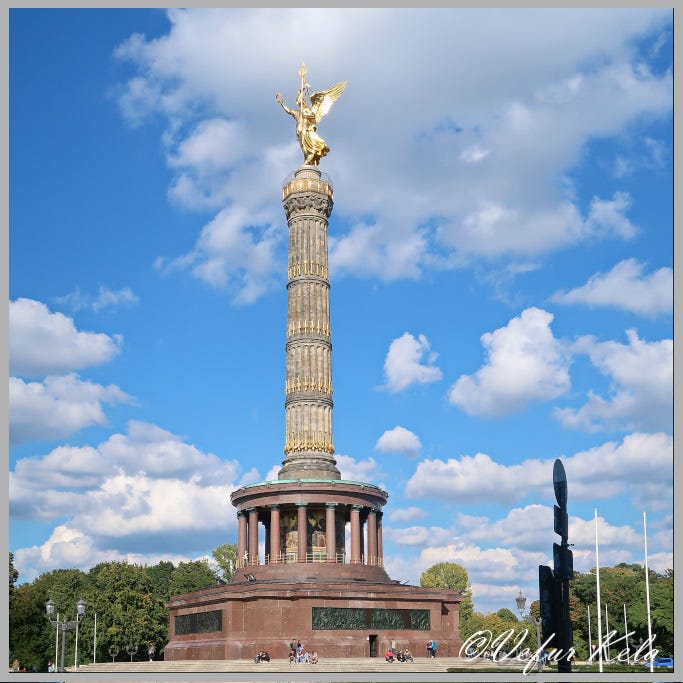
There is a large area in front of the parliament building. Previously, the Victory Column was in the middle of the field, but the Nazis felt it was in the way when they were preaching to the masses. We visited the parliament building in Berlin twice. The first time was during the bike tour with “Berlínurnar,” and the second time was on the last day of the trip. The parliament building is a massive structure near the Spree River, with Tiergarten to the west and the Brandenburg Gate to the south. The building was put into use in 1894 and was the headquarters of the Imperial Empire from that time until the Weimar Republic took over. The building was constructed in a Renaissance style and is quite magnificent. In 1933, a great fire occurred in the building, and that event triggered a process that ended with Hitler seizing absolute power in Germany. The parliament building was severely damaged in the Allied bombing during the Second World War, but after renovations and the reunification of East and West Germany, it was used again as a parliament building. Now, the lower house of the German parliament meets in the building.
My wife and I were content with admiring the building from the outside. If we had been foresighted, we could have booked access to the building in advance, and we probably should have done that because it wouldn’t have cost us anything. If we had done that, we would presumably have been able to get a great view over the city from the massive glass dome that was built in 1999.
The Berlin Wall
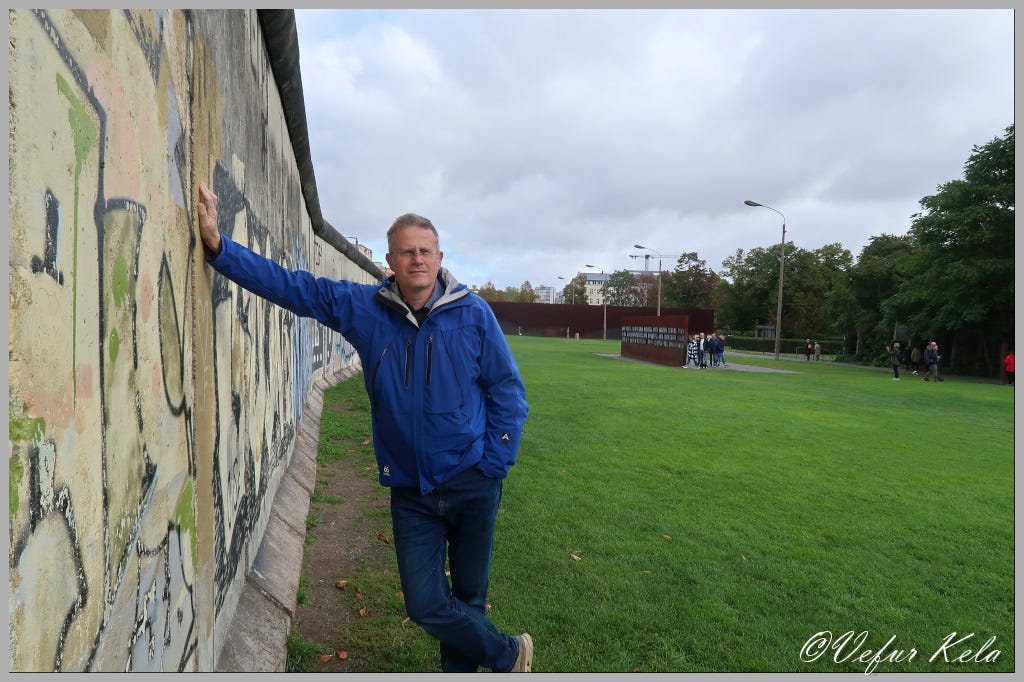
The wall was 5 meters high and 45 km long. In reality, it was two walls with about 150 meters between them. The area between the walls was called the death zone. It must be admitted that the history of this remarkable city makes one reflect on how fragile human existence is. This is especially true of the history of Berlin that is closer to us in time. The power struggles in Germany following the First World War created the soil for the rise of the Nazis, and all the horrors that followed that rise weigh heavily on the mind. The solutions offered to Europe after the fall of the Nazis did not improve one’s mood either. The Berlin Wall, or the remains of it, bears witness to those horrors. It is frankly terrifying to put this history into context with what is going on in Europe right now. The similarities are eerily great. One asks oneself if history is about to repeat itself. Again and again, these reflections took flight as we explored the main points of interest in this fine city.
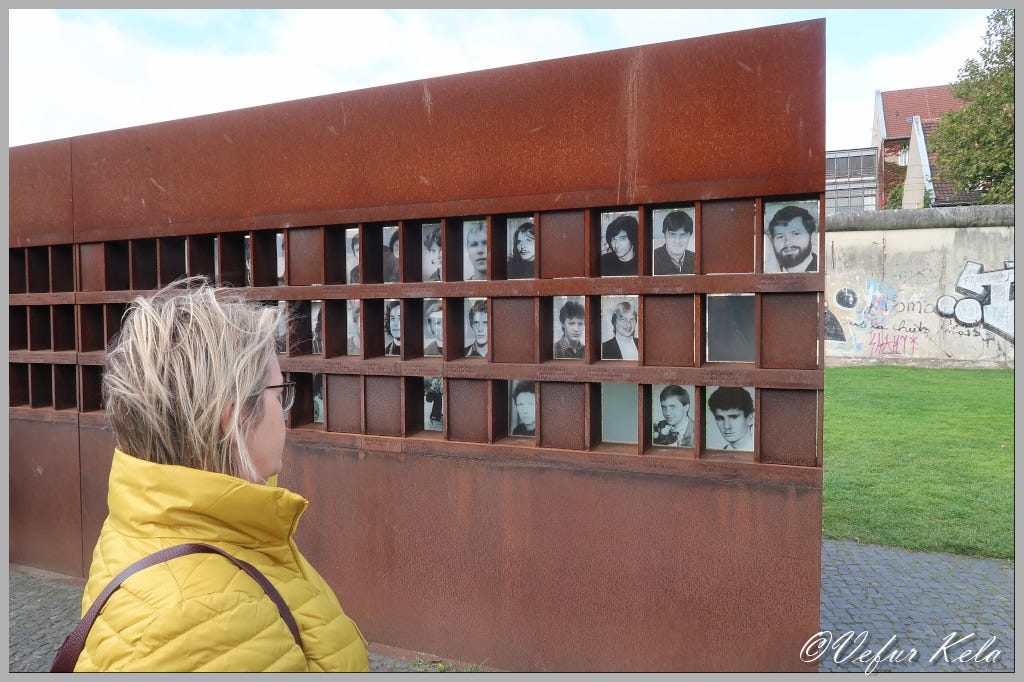
Guðrún’s and my trip east of the Iron Curtain in August 1989 came back to us as we listened to the guide’s account of the wall and its origins at Checkpoint Charlie. We felt a bit like ghosts from a distant past when we told the young people who were with us on the bike tour of our experience of life east of the Iron Curtain before the wall fell. Which it did in October of the same year we were there. This was a “My children, my children. When I was at sea...” experience. We were then to visit two other places where the origins of the wall were commemorated. In one place, a long, standing section of the wall was decorated with artwork by artists from all over the world. In the other place, there was a monument to the wall and the 141 East Germans who died trying to escape over the wall to West Berlin. The last one died on March 8, 1989, when he fell from a hot air balloon he intended to fly over the wall in. During the period 1961–1988, over a hundred thousand people tried to escape to West Germany, and over 600 of them were killed by East German border guards.
Dining Out
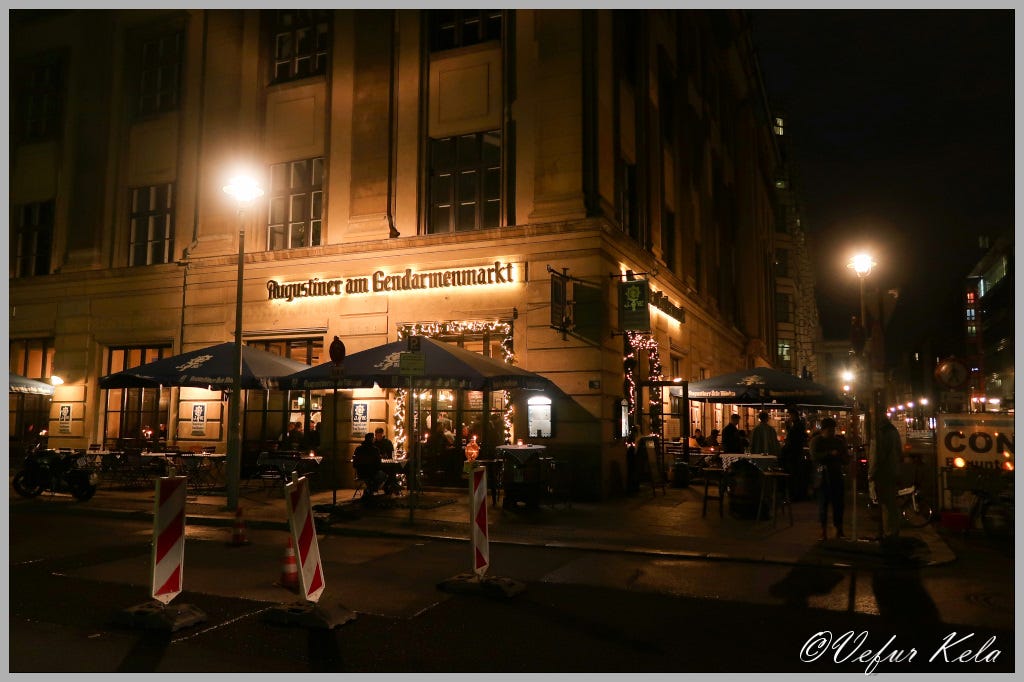
One of the things that comes with trips like this is sitting in restaurants and cafes. On our trip to Berlin, we went out to eat surprisingly little. Things just worked out that way somehow. The first evening, we were simply too late, and one restaurant after another turned us away at the door because they were completely full. Therefore, we ended up at the Doner Kebab joint by Friedrichstrasse station and had a kebab with way too much chili. The next day, we had walked so much that we simply didn’t have the energy to do anything but grab some fast food. The third evening, we went to a decent restaurant and had an expensive steak. The day after that, I got some kind of stomach bug and was not in a state to be out among people. The following day was spent recovering, so the Indian guy at the kebab joint saved us again. It wasn’t until the second-to-last evening that we sat down in a decent restaurant again. Of course, we had schnitzel.