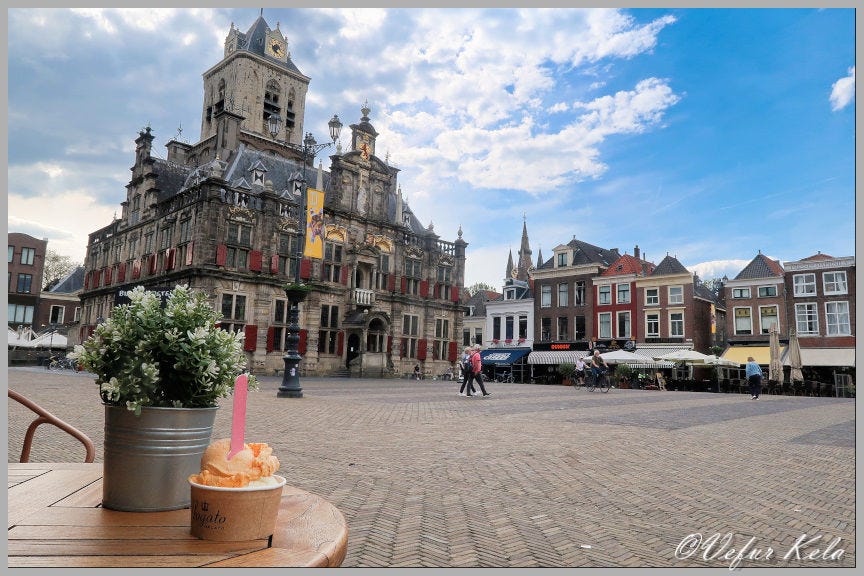
Right now, I am sitting under a typical Central European church tower in the city of Delft in the Netherlands. The reason for my presence here is a study trip for school administrators from schools belonging to the North District of Reykjavik. The group received an Erasmus grant, and the main theme of the trip is the Dutch approach to teaching students of foreign origin. This is one of the larger challenges facing most schools in Reykjavík today, and the Dutch, due to their experience, must have something to share.
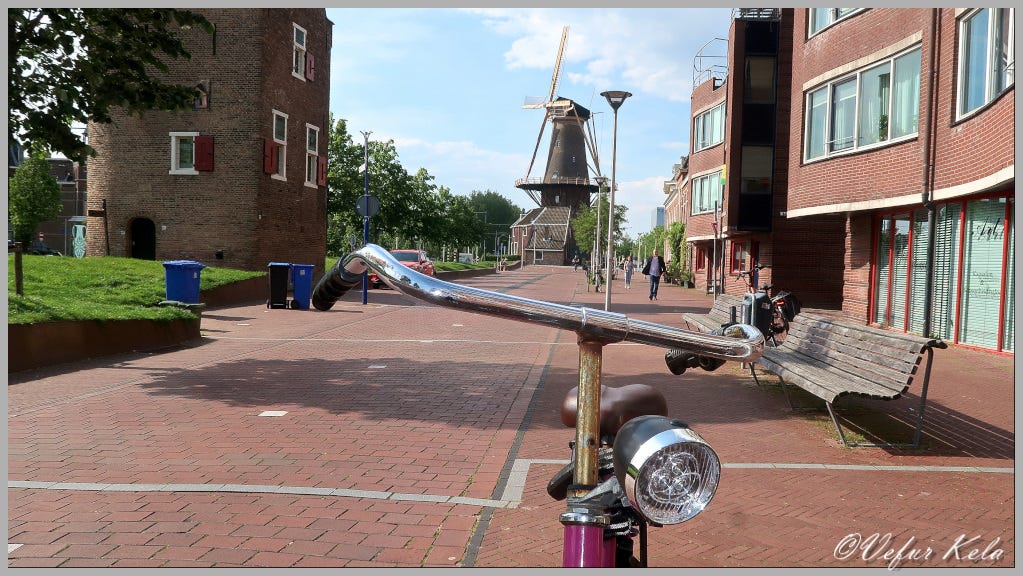
Það var flogið út á þriðjudeginum 14. júní. Á leiðinni á milli Sciphol flugvallar og Delft sá maður að Hollendingar treysta tölvuert á vindorkunna þannig að þessi risastóru hvítu mannvirki voru alls staðar meðfram hraðbrautinni. Maður sá einnig að Hollendingar eru ennþá að nota gömlu vindmyllurnar sem eru heldur meira fyrir augað. Óneitanlega leitaði hugurinn upp í Norðurárdal og til þeirrar sjónmengunar sem svona ferlíki í Hvammsmúlanum munu valda. Eftir að hafa komið farangrinum fyrir á hótel Hampshire í Delft rölti ég niður í miðbæ. Eftir að hafa áttað mig á umhverfinu settist ég niður á veitingastað á aðaltorginu í bænum.
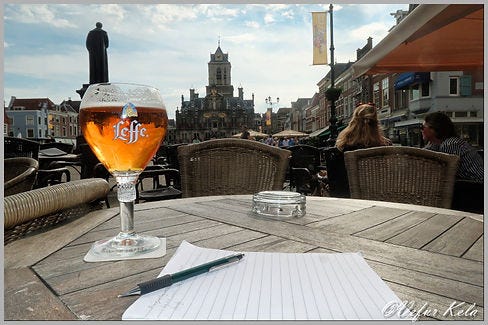
We flew out on Tuesday, June 14th. On the way between Schiphol Airport and Delft, one could see that the Dutch rely considerably on wind energy, as these gigantic white structures were everywhere along the highway. One also saw that the Dutch are still using the old windmills, which are a bit more pleasing to the eye. Undeniably, my mind wandered back to Norðurárdalur and the visual pollution that such monstrosities in Hvammsmúli will cause. After dropping off my luggage at the Hampshire Hotel in Delft, I strolled down to the city center. After getting a feel for the surroundings, I sat down at a restaurant on the main square in town.
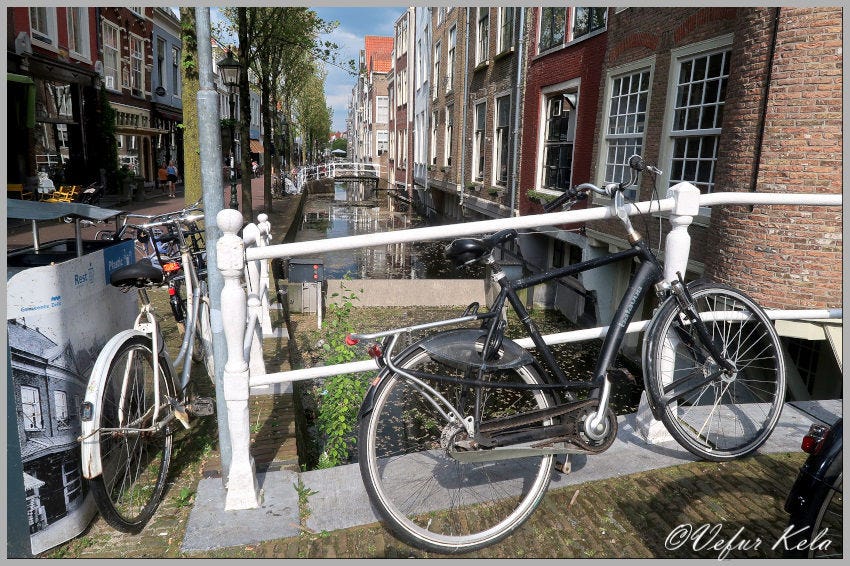
Delft is a city of about one hundred thousand people. The city center is charming with its canals and old buildings. It clearly bears the marks of its 750-year history, but it is probably best known for being the birthplace and workplace of the Dutch painter Johannes Vermeer, who painted the picture of the Girl with a Pearl Earring. Then there are also the blue ceramic items that have been produced in Delft since the seventeenth century.
On Wednesday morning, we drove to Gouda, which is a city of 75,000 people. There, the group was divided into two. I went to a primary school that was a specialized facility for students of foreign origin. Students could stay in that school for anywhere from 16 to 40 weeks. The length of time depended on how well the children succeeded in mastering the new language. The main focuses of the education were on Dutch language and culture, social skills, and mathematics. I was hoping that the Dutch, in light of their greater experience, had developed an efficient system for the reception and integration of students of foreign origin into mainstream schools, but it seems they are grappling with the same problems as Icelanders: long waiting lists for specialists, teacher shortages, and financial rather than professional grounds for decisions. Still, there are many things we can learn from them.
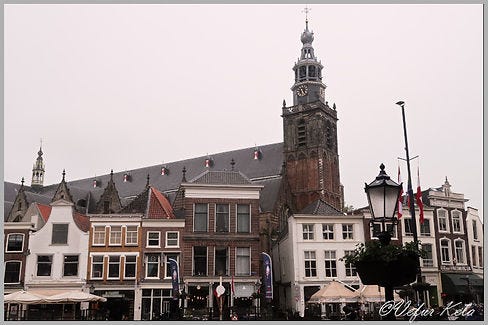
In the afternoon, we had a lecture on the Dutch school system at a teachers' college in Gouda. The Dutch school system is different from the Icelandic one. They place great emphasis on systematically analyzing the aptitude and ability of students and guiding them into different educational paths. After the lecture, the group sat down at a restaurant. It was raining hard outside. Finally, I gave up waiting out the rain and strolled into the Sint Janskerk church.
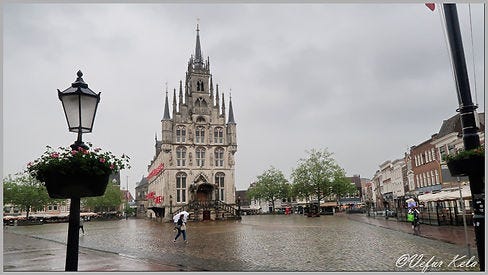
Most of it was built in the 16th and 17th centuries. The tower was built around 1350, and the foundation under the choir in 1485. The church is no small feat. Its length is 123 meters, the longest in the Netherlands. After taking a tour around the church, I strolled into the town hall square. There, of course, stands the city hall, which was built in the fifteenth century. The journey home was rather clumsy because I took the train to Rotterdam and from there to Delft. Except I forgot to get off and ended up in The Hague. From there, I took the train back. I will probably not manage to visit four cities in one day again in this lifetime.
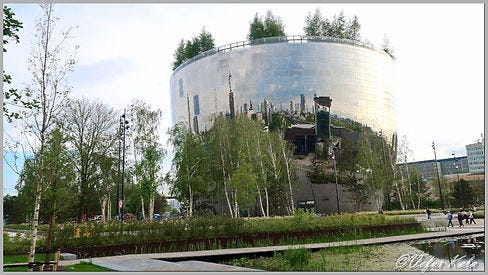
On Thursday, the day began with a trip to Rotterdam, where the group visited an institution that specializes in supporting schools regarding students who need special support of some kind. After lunch, the group was divided into three. I visited a high school with students aged 12 to 18. There, we received a presentation on a department within the school that welcomes students of foreign origin. After the visit, I took the time to explore what is considered most noteworthy in Rotterdam. To tell the truth, I found the city exceptionally uninteresting. Undoubtedly, there is something interesting to be found there, but that part of the day was not enough for me to discover it. Rotterdam is an old city. Its origins can be traced to the middle of the thirteenth century when a dam was built in the river Rotte. There lies the explanation for the name, Rotterdam. The old houses that grace old cities are not in the city center. The explanation for that is that the Germans bombed the city center to pieces in 1940. Old houses can, however, be found in Delfshaven, but I did not get there.
Friday was mostly a free day. It began, however, with a meeting where the travel group reviewed what we had seen and experienced during visits to schools and institutions. At the meeting, guidelines were set for cooperation to develop the reception and teaching of students of foreign origin. That is sorely needed, as this group is growing very fast in Iceland. Never in history have more refugees been on the move in the world, and Iceland is not exempt from that. After the meeting, everyone was free to do as they pleased until six o’clock, when we were scheduled to sail together on the canals of Delft and have dinner together.
Föstudagurinn var að mestu leiti frír dagur. Hann byrjaði þó á fundi þar sem ferðahópurinn gerði upp það sem við höfðum séð og reynt í heimsóknum í skóla og stofnanir. Á fundinum voru lagðar línur með samstarf við að þróa móttöku og kennslu nemenda af erlendum uppruna. Það er ekki vanþörf á því þessi hópur er mjög vaxandi á Íslandi. Aldrei í sögunni hafa fleiri flóttamenn verið á ferð í heiminum og Ísland fer ekki varhluta af því. Að fundi loknum voru allir frjálsir ferða sinna þar til klukkan sex en þá átti að sigla saman á síkjum Delft og borða saman.
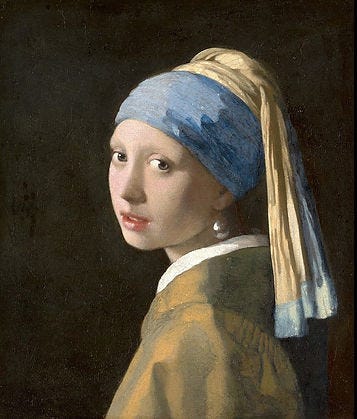
I had decided to start my free time by exploring the main pride of Delft. That is the painter Johannes Vermeer. Vermeer was one of the main painters during the Golden Age of painting in the Netherlands. He was born in 1632 and died in 1675. There are only 34 works by him, which is not considered many. These works are in museums around the world. Just west of the New Church is the Vermeer Centrum museum, which is dedicated to this notable painter. It is well worth visiting if you have any interest in art at all. In the time when Vermeer lived, painters were the ones who documented history in pictures because photography had not yet been invented. By visiting such a museum, you are therefore also learning about the lives of people in earlier times. In this museum, it is the history of the common people that is in focus, because Vermeer painted primarily the everyday life of the middle class, and more often than not, it was women who were the subject. His most famous work is probably Girl with a Pearl Earring.
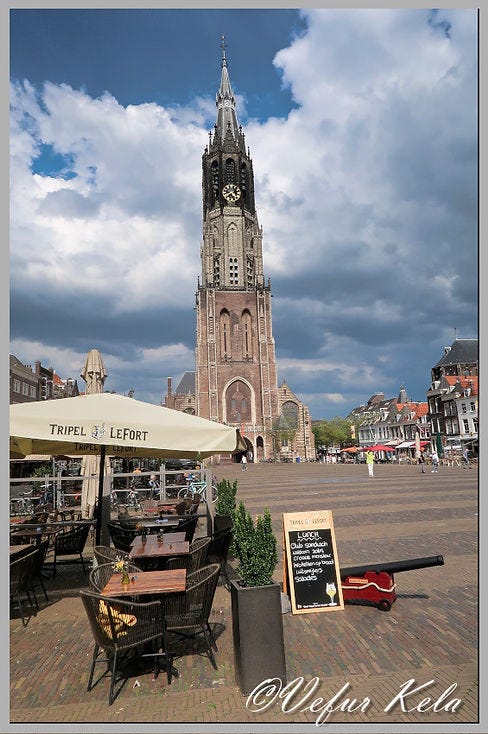
After visiting the museum, I strolled over to the New Church. A strange name for a church whose construction was completed in 1495. The church has a 109-meter-high tower, which is the second-highest church tower in the Netherlands. The church is primarily known for being the burial place of the kings of the Netherlands. The first to be laid to rest in the church was William the Silent, who was one of the main freedom heroes of the Dutch, and was laid in a grave in 1584.
Then we walked a short distance over to the Old Church (Oude Kerk). That church dates back to 1249, and there lies the explanation for the naming of the churches. The Old Church is best known for its stained-glass artwork. In the Old Church, I stumbled upon Vermeer’s grave. In the evening, there was a sailing trip on the canals and dinner at one of the restaurants.
On the last morning, I sat on a bench under the New Church and wrote this text. Then I strolled to the market. In the streets on one side of the city hall square, there was an antique market, but on the other side, there was a food market. Then we flew home, and Guðrún and I drove straight up to Brautarlækur.