
Originally written on December, 4th, 2021.
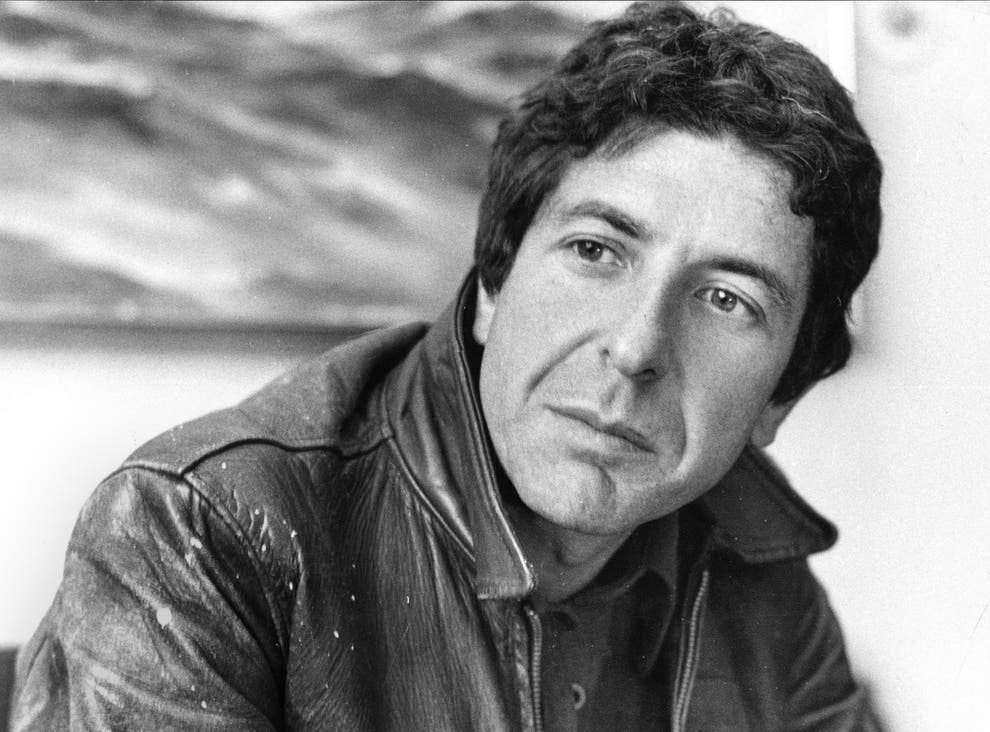
The song “Hallelujah” is Leonard Cohen’s best-known song. It was first released in 1984 on Cohen’s album, Various Positions. The song garnered little attention, and in fact, the record company that released Cohen’s work thought so little of it that they did not want to release it. The song made it onto the album anyway, but garnered little attention. A few people did notice it, however, and among them was Bob Dylan. He performed the song occasionally at his concerts, for the first time in 1988. John Cale of the Velvet Underground made the first cover of the song in 1991 after hearing the song at a Cohen concert. That cover garnered somewhat more attention than Cohen’s version. Jeff Buckley then heard Cale’s cover and made his own. That cover went on his album, Grace, which was unfortunately his first and last. This version was set to take the song to new heights. That did not happen immediately, however. It was not until after 2001, after it was used in the animated film Shrek, that the song truly took wing. Since then, an incredible number of artists have covered the song. Over 300 covers of the song are known, and numerous well-known artists have tried their hand at it. Buckley’s version is the one that is best known.
Leonard Cohen was fundamentally a trained literary scholar, poet, and writer. He went into music to make ends meet. No one can make a living being just a poet. It is therefore no surprise that he took his time with songwriting. He, of course, wanted his lyrics to have some depth and meaning. The story goes that in a conversation with Bob Dylan at a coffee house in Paris, he lied, saying it took him two years to compose “Hallelujah.” He probably felt it was a bit much to admit the truth, which was five years. Dylan, on the other hand, boasted that it took him fifteen minutes to write the song “I and I.” Another story says that Cohen sat in a hotel room at the Royalton Hotel in New York, banging his head on the floor in despair while writing the lyrics. He apparently wrote drafts of some eighty verses before a final result was achieved. In fact, there was no final result because he did not always use the same verses when he performed the song in concert.
In many of Cohen’s lyrics, there are references to the Bible, and in “Hallelujah,” there are several. However, the lyrics should not be understood as a religious text, because that is not at all the purpose of the references. The song’s lyrics, according to my understanding, revolve primarily around love, loss, and how love can change and fade over time. The religious references are a brilliant way to shed light on the complex and often difficult human emotions that arise when love is involved. The Hebrew word “hallelujah” is originally a religious word meaning “praise the Lord,” but in the song’s lyrics, that is not necessarily the meaning. Cohen himself said in an interview that various other meanings could be attributed to the word.
I became acquainted with Cohen’s work many years ago when I was struggling to learn a fingerpicked accompaniment to the song “Suzanne,” which is another song that many artists have performed. First Judy Collins, but then Cohen put the song on his own album, Songs of Leonard Cohen, in 1967. Other songs I knew by Cohen were “Dance to the End of Love” and “First We Take Manhattan.” The song “Hallelujah” did not catch my particular attention until a few colleagues at Selásskóli in Reykjavík decided to form a band to play friendship songs to accompany the students’ singing on friendship days at the school. It just so happens that there are lyrics for the song “Hallelujah” written by Unnur Halldórsdóttir that are about friendship. That, along with several other friendship songs, we then played to accompany the school’s students singing for many years. Amusingly enough, I found a recording of this playing.
The song “Hallelujah” begins after 4:44 minutes.
I have always wanted to gain proficiency in arranging songs for fingerstyle guitar. To gain that proficiency, one must, apparently, practice the sport. That is why I went to work and intended to find a song to arrange. I had decided to put together an arrangement of the song “Fire and Rain” by James Taylor, but for some reason, I had completely unexpectedly started arranging “Hallelujah.” The arrangement is, of course, very simple, as I can’t handle anything else. Usually, I play the song in G major, as I can manage to hum along then. Here you can find my attempt to play my own arrangement. I have always wanted to gain proficiency in arranging songs for fingerstyle guitar.