Autumn has truly arrived, we thought as we encountered a large flock of sheep streaming toward Hellisá on their way to the Þverárrétt sorting fold. We were surprised to see how many sheep still remained on the slopes above Fornihvammur, but as we climbed higher onto Holtavörðuheiði, the reason became clear. If the gatherers had attempted to muster the moor, they could hardly have seen a single sheep through the dense fog. We were headed for Hópið, fairly certain that this would be our final fishing trip of the year.
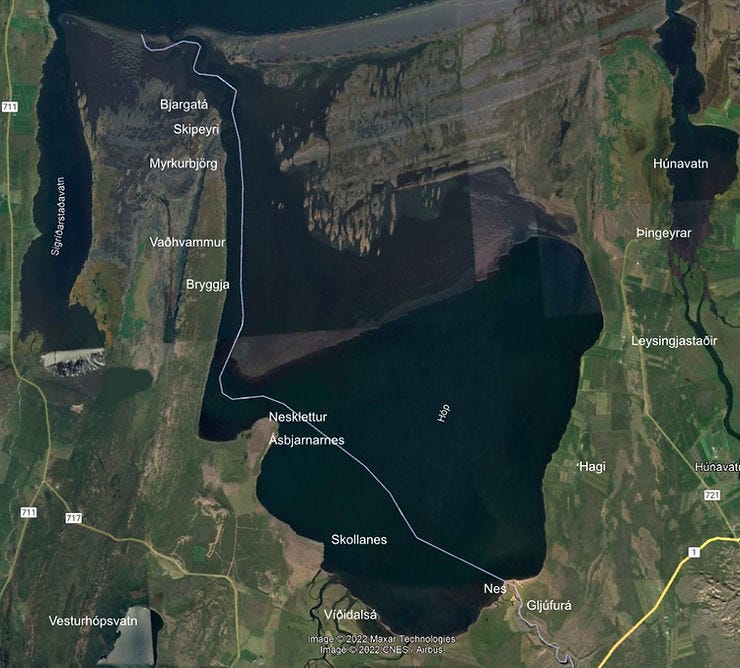
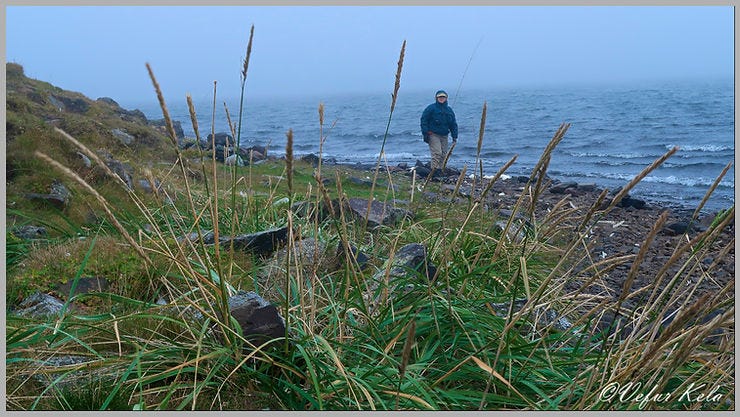
We weren’t too optimistic as we turned north onto Route 716; the fog was quite thick by Vesturhópsvatn. We had been looking forward to seeing the landscape, as we don’t travel these parts often. The fog lifted slightly, but never enough to offer a real view. There was a northerly breeze, and though it wasn’t particularly cold, the temperature stayed around eight or nine degrees. We started fishing by the cliffs at the tip of Ásbjarnarnes—the same spot where we began back in 2014, the last time we visited Hópið. We didn’t see a sign of fish there.
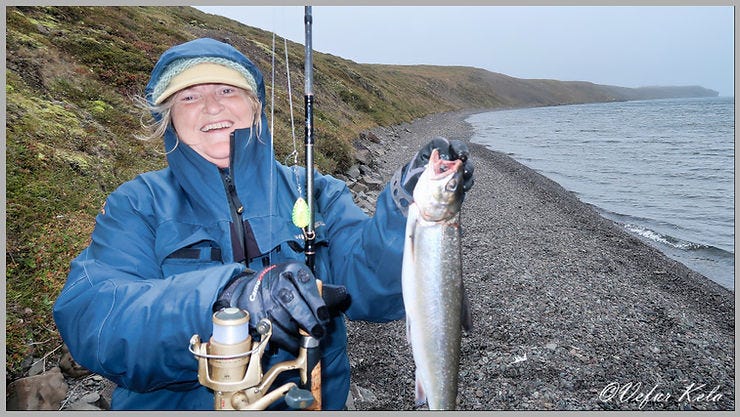
Soon we moved north of the cliffs. The conditions were better there, but the north wind beat down on us, making our stay by the shore rather unpleasant. We caught one tiny sea trout. We then moved south of the cliffs, where it was calmer and more comfortable. Having seen no further sign of fish, we decided to head home, but not before casting a few lures. My wife hooked a 1.5-pound sea-run arctic char, and with that, our final fishing trip of the year came to an end. We headed home for dinner.
Since we aren’t very familiar with fishing in Hópið, we weren’t overly optimistic about our chances. We know it takes time to learn the ropes of a new body of water, and it doesn’t simplify matters when the lake is this massive. Hópið is the fifth-largest lake in Iceland, covering between 29 and 44 square kilometers depending on the tides. It isn’t deep, reaching only 9 meters at its deepest point. We didn’t have a local guide with us, so there was nothing to do but try various spots until we found a promising one.
We found some descriptions on a few fishing websites about where to start. The northern and eastern sides of Ásbjarnarnes are considered promising; that’s where we began and where we caught the sea-run arctic char, just off the eastern side of the peninsula. It would also have been worth driving further north along the lake to try the spots beneath the slopes on the western side toward the outlet. However, the trail down there is quite rugged.
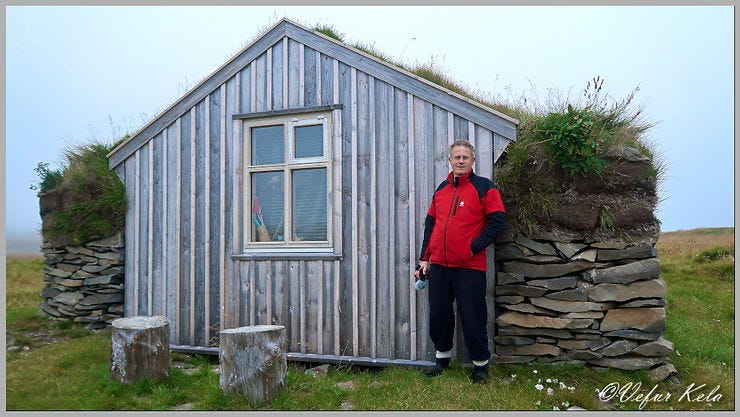
The descriptions also mention lunch and restroom facilities at Ásbjarnarnes. My wife and I suspected this might refer to an outhouse we saw standing in the middle of a field and the Ásbjarnarnes farmhouse, which turned out to be in total disrepair. Next to the farmhouse was a turf house that looked to be in decent shape, but there was no indication it was the facility in question, as it was locked.