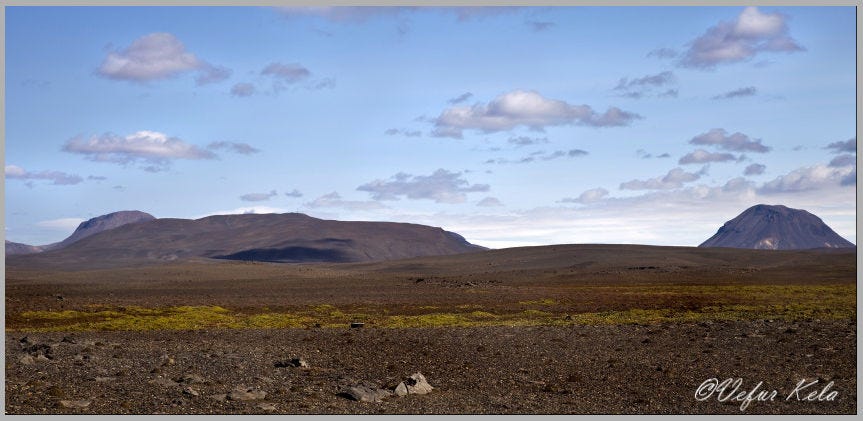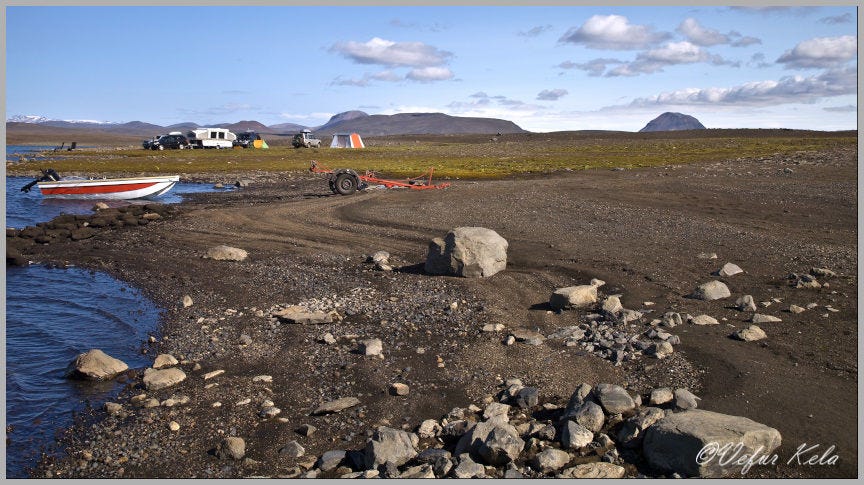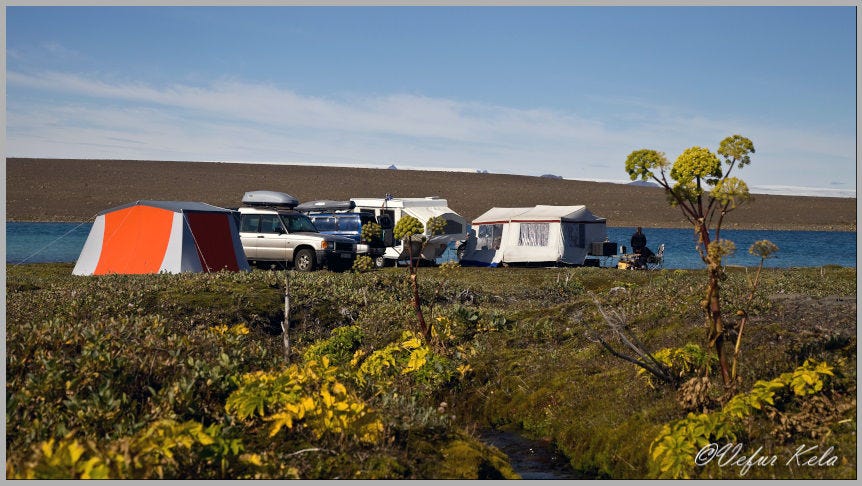
On the highlands southeast of Hofsjökull lies Kvíslavatn, or the Kvíslaveitur reservoirs. Kvíslavatn is a reservoir of over 20 square kilometers that was formed between 1980 and 1984 when several tributaries (forks) of the Þjórsá river were dammed. In the first years after the reservoirs were created, a large number of brown trout smolt were released into them. If no releases have occurred in recent years, it stands to reason that natural spawning maintains the population.
After driving some 60 km from Hrauneyjar along the Sprengisandur route, we turned off that wretched road and followed a fishing track for about five kilometers to the fishing area located below Svörtubotnar. The weather was wonderful: calm, cold, and starry. During the night, the temperature dropped to near freezing. In the morning, the weather remained the same: a clear sky and still winds.
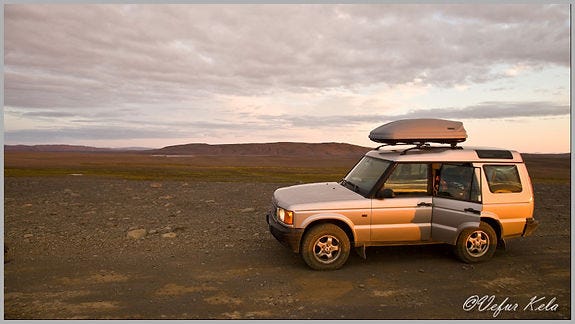
We fished at a leisurely pace from morning until sunset. Around mid-day, news reached us that an eruption had begun in Dyngjujökull, which was only about 70 km northeast of us. According to the reports, a flood was expected from under the glacier, which was supposed to flow into Hágöngulón just a short distance to our east. It must be admitted that after the news, one kept casting an eye toward the supposed eruption. We never saw any signs of it, as it turned out there was no eruption underway—only ongoing seismic activity that was so far away we didn’t feel it.
By evening, a southwesterly breeze had picked up. Throughout the day, we had pulled in the occasional fish, but as the sun was setting, twelve trout ‘ran onto the line’ in a short span of time. Those who were on boats and could fish in the middle of the lake caught much more than we did, and the fish there were somewhat larger than those caught from the shore. By the end of the day, we had landed 21 fish. All of them were between 1 and 1.5 pounds. They were all filleted upon returning home and are now waiting to be smoked.