Originally written on June 20th, 2004.
At the summit of Foxufell in mid-June 2003, the preparations for the trip began. It was then that my companion, Örn Halldórsson, blurted out: “I think Valli would enjoy this.” With that, it was decided that we would go the following year and invite Valli along.
When the idea was brought up to him at one of the Carpentry club meetings that winter, he didn’t hesitate for a second. A fisherman like him was bound to be excited, especially since his interest was fueled by incredible tales of relentless fishing. “I’m in,” was the answer.
The plan was to set off at the crack of dawn on Friday, June 18th, and fish until evening, as well as all day Saturday. By Wednesday, the excitement was palpable, especially since the fishing had been exceptionally good the year before. However, Örn and I didn’t believe we would encounter the same adventures again, as such luck rarely strikes two years in a row.
In the days leading up to the trip, Valli started feeling a bit anxious about trekking with a heavy backpack over the rugged Hólmshraun lava field and then over Foxufell, as he was completely unaccustomed to hiking. He preferred walking along Vatnshlíð, which lies on the western side of the lake. Örn and I were willing to do that, as if it had been the original plan. We were simply so captivated by the impressive landscape on the eastern bank that we desperately wanted Valli to experience it, just as we had so vividly in the years prior.
When walking the eastern bank, you first have to trek quite a distance across rugged lava. It’s best to wear boots with good ankle support there; taking a tumble on that path would be particularly unpleasant. Next comes an easy stretch until you reach Foxufell.
Foxufell is a 419-meter-high tuff mountain that really tests the stamina of those out of shape. Once at the top, you have to scramble down the formidable northern slope. Along that part of the route, the sheer tuff cliffs, weathered by the winds, tower over you. It’s quite daunting. When the cliffs end, there’s a relatively easy walk down the hillside until you reach the northern end of Lake Hítarvatn.
We have taken this route three times. The first time, we disturbed a mink in its den. The second time, we came across an eagle perched in the cliffs where Foxufell overlooks the water. When the eagle noticed us, it launched itself off the rocks and soared across the lake with slow, majestic wingbeats. On the third occasion, a falcon was displeased by humans passing through its kingdom and made its feelings very clear.
This year, we decided to walk along the western bank of the lake. We thought it likely that the trek would be easier than the walk along the eastern bank.
We bought the fishing permits in advance from the Reykjavík Angling Club for 2,500 ISK. It’s a bit pricey for trout fishing in a lake, but one can take comfort in the fact that the prospects are excellent. Permits can also be purchased at the farm Hítardalur. This farm was the site of one of the most horrific events in Icelandic history, when Bishop Magnús Einarsson of Skálholt perished in a fire along with 70–80 others in late September 1148.
There are only two farms in the valley, Hítardalur: Hítardalur itself and Helgastaðir. At the head of the valley is a small tuff mountain called Hólmur, which marks the southern end of the lake. Beneath the mountain stands a mountain hut, located where the farm of Björn Hítdælakappi once stood. He was considered a great hero. Legend has it that he, along with the mighty Grettir Ásmundsson, placed the “Grettisstillur” (Grettir’s Stepping Stones) in the Hítará river. These are stones set in a row across the river that have remained unmoved ever since. Folklore also says that Björn built a massive stone wall across his property. Remains of that wall can still be seen today.
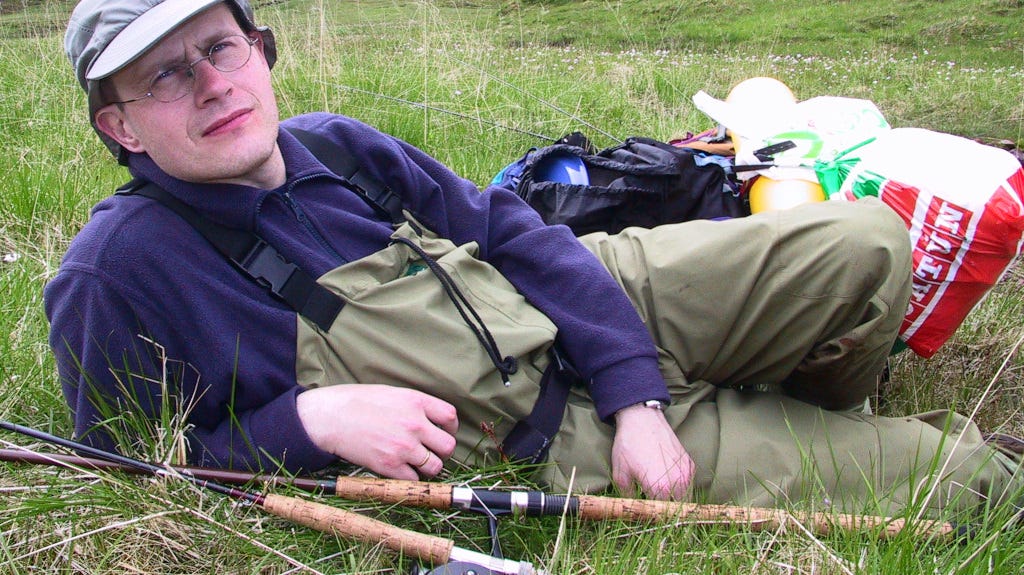
When we reached the lake, we hoisted our 19–22 kg backpacks onto our shoulders, picked our way across the dam at Hítará, and the hike began. The weather was as good as it gets—calm and not too hot, as the light breeze that picked up occasionally came from the north. However, the flies were uncomfortably aggressive.
The trek along the western bank of the lake proved to be quite easy, as there are no steep climbs along the way. This turned out to be many times easier than the hike on the eastern side. The route goes beneath Vatnshlíð, which is fairly vegetated all the way to the end. The terrain alternates between marshes and tussocks, but for the most part, it’s possible to walk right by the water. The wetlands were manageable enough that we never had to detour around them.
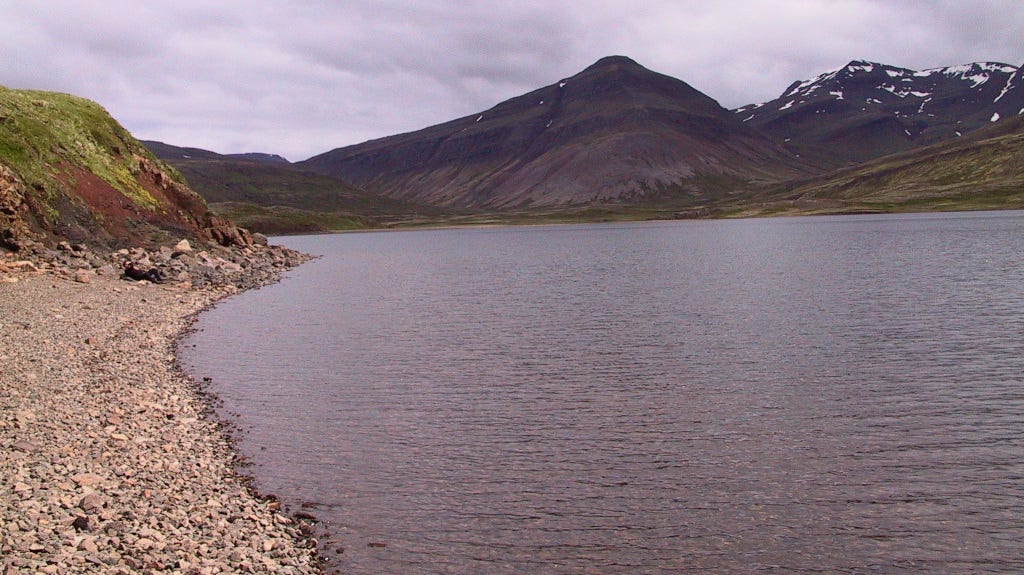
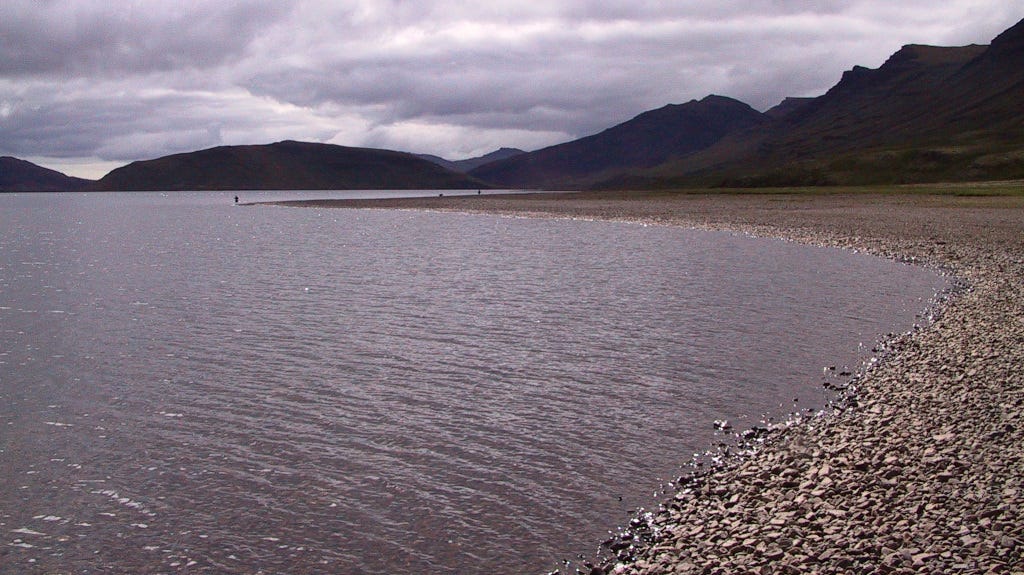
After a two-hour hike, we pitched our tents at the far northern end of the lake, right by Burstará, the lake’s largest inflow. After eating dinner, we got our fishing gear ready. Valli pulled his waders out of his backpack and uttered those famous words: “I’m an idiot.” The poor guy had brought the wrong waders. Not a great start.
Then the fishing began. By now, the wind had shifted to the southwest and it had started to rain. We, who had expected sunshine and calm weather, were now caught in wind and rain. That evening, we managed to pull out a few brown trout, but it couldn’t be said that the fishing was anything like what we had previously described to Valli.
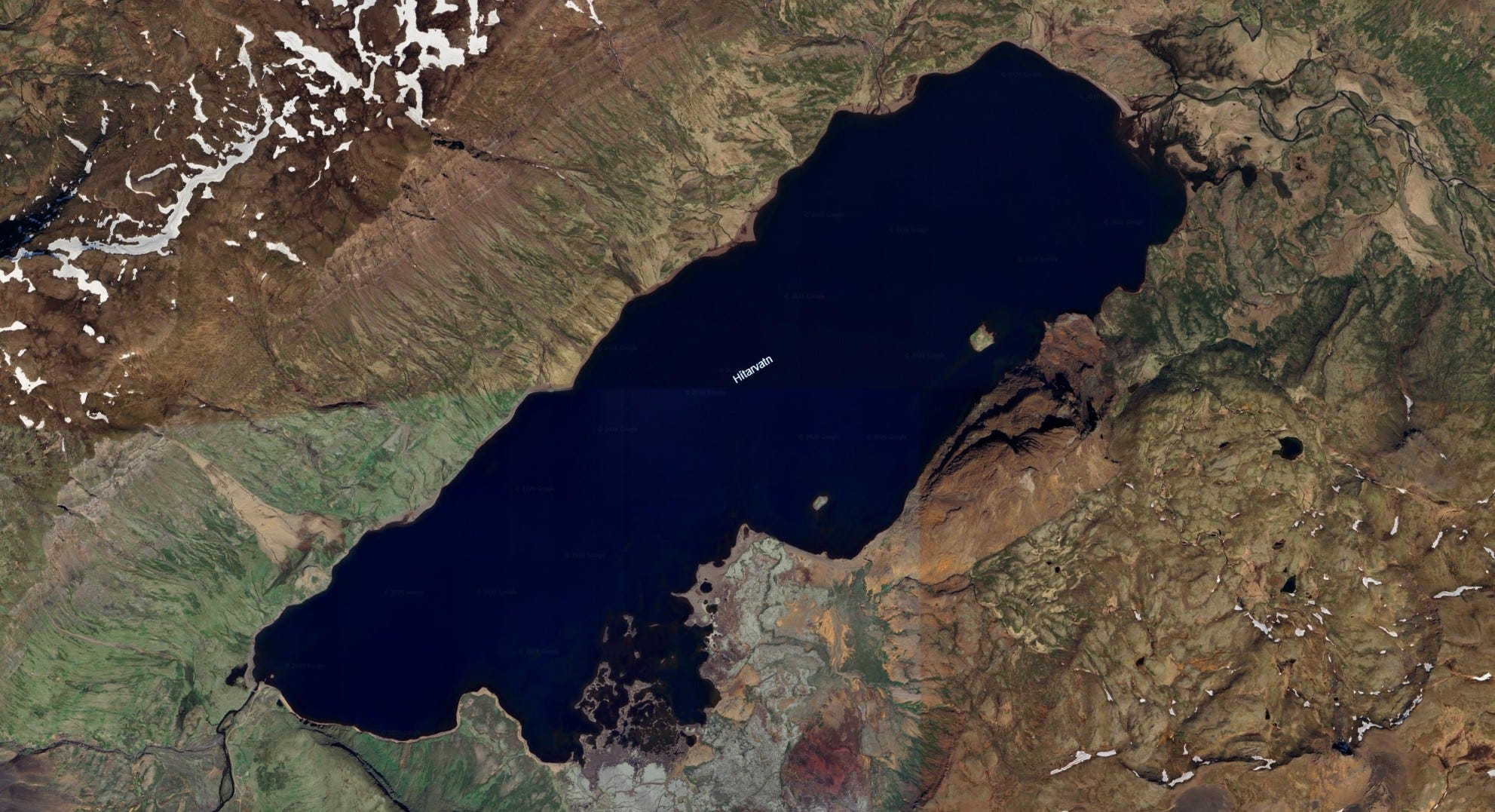
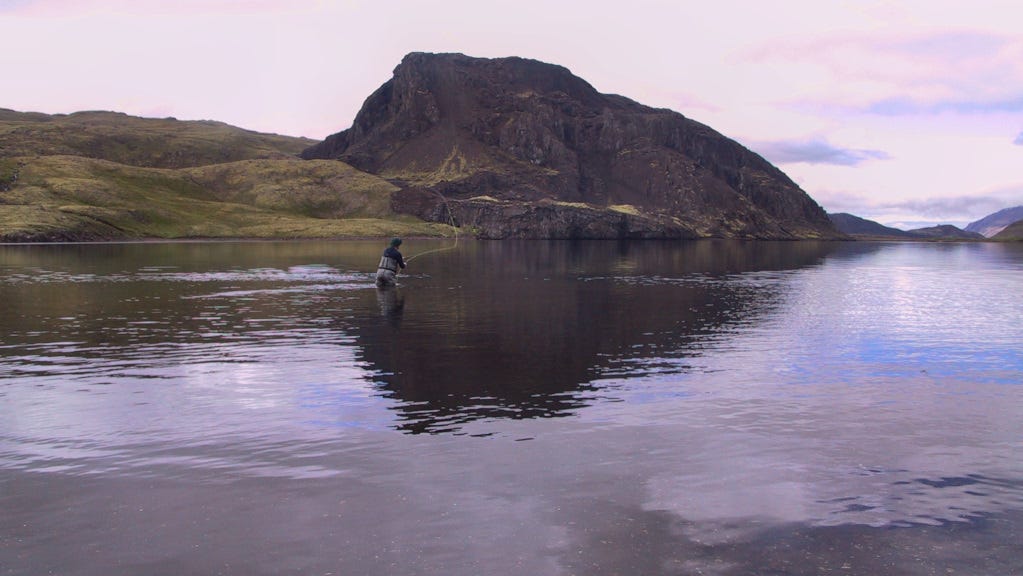
On Saturday morning, we were greeted by weather so magnificent it could hardly be improved upon. Ahead of us lay Lake Hítarvatn in all its glory—7.6 square kilometers in size and 24 meters deep at its lowest point. Out on the lake, there are several small islands adorned with wildflowers. Birdlife around the lake is quite abundant, though it has diminished somewhat, and the mink—that great saboteur—is suspected of foul play.
A lake of this magnitude is bound to harbor massive brown trout, but as fishermen know, they are not easily caught. Most people tend to fish on the southern side of the lake, as it is the most accessible direction. However, we have proven that there is a chance for larger fish at the northern end, which is why we undertake the long hike.
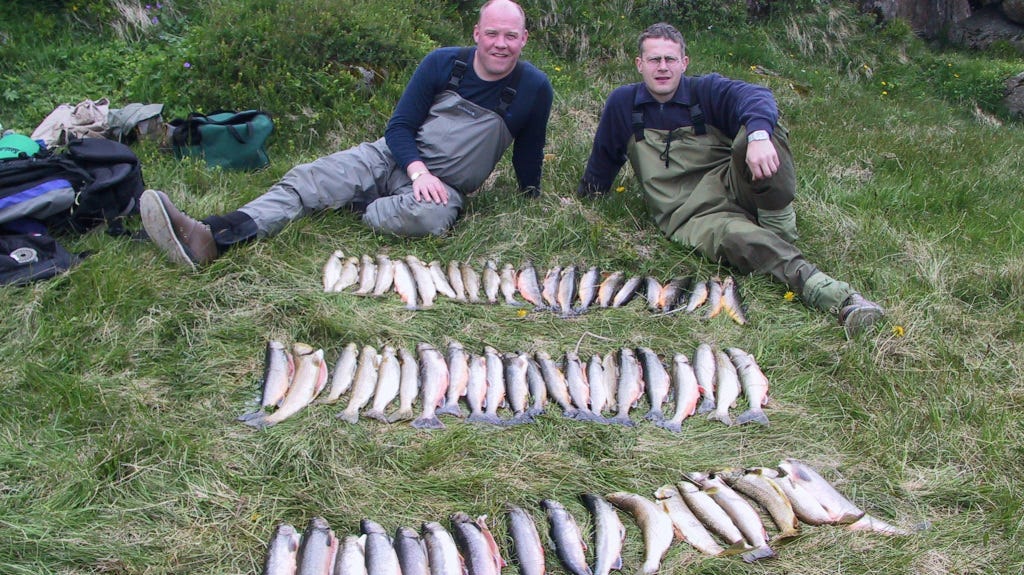
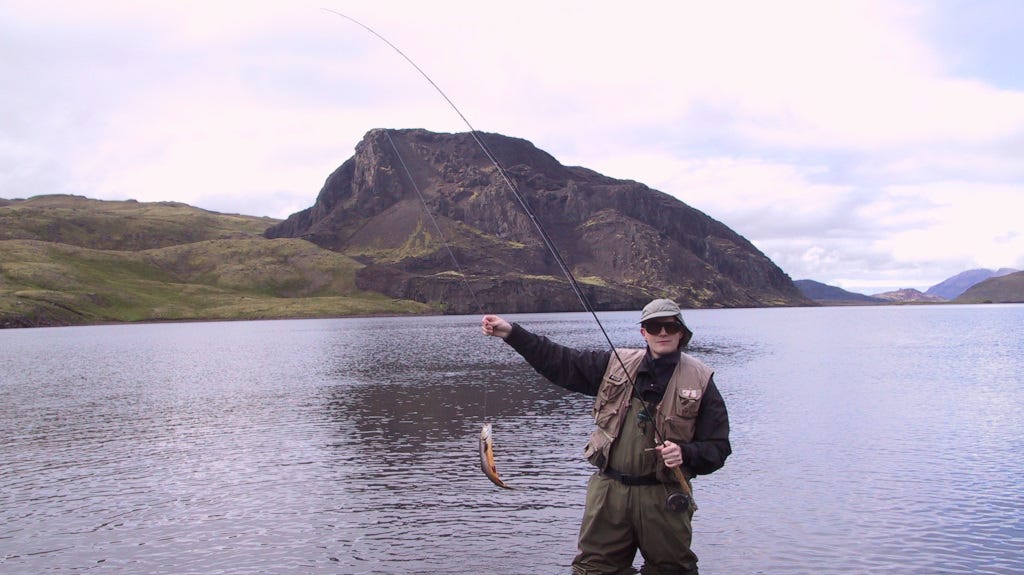
Now the fishing turned out exactly as Örn and I remembered it. Absolutely fantastic. In a short time that morning, we landed one Arctic char after another, along with the occasional brown trout. At one point, all three of us were landing fish at the exact same time. The char seemed greedy for the fly, and it didn’t seem to matter whether the fly was sunk or kept on the surface. It was thrilling to watch them take the dry fly right off the surface. If we wanted to catch trout, mackerel was the better bait; the char, however, wouldn’t touch it.


The fish we were catching weren’t large, though all were “pan-sized.” Örn and I kept the ones between 1–2 pounds. Valli, however, considers it a crime to release a caught fish and kept everything. A Parasitic Jaeger (Skuas) took a keen interest in our activities and was fascinated by our fishing gear. Once, we saw Valli’s float dangling 30 meters above the water’s surface after the bird had dived for it. Another time, a Jaeger flew off with Örn’s rod. Fortunately, it flew west across Burstará instead of south over the lake; had it gone south, Örn would never have seen his rod again. Untangling the bird from the hook was an unpleasant task.
The trek back was a much more grueling ordeal than the walk to the fishing grounds. The loads were significantly heavier, and Valli was utterly exhausted by the time we finally reached the car. He declared that he would never do this again. We’ll just have to wait and see about that.