Hafið þið heyrt af veiði í Þórisvatni“; spurði einhver af veiðifélögunum þar sem við sátum yfir steik og rauðvíni síðastliðinn vetur og ræddum veiðimál. Enginn okkar þekkti til veiða í Þórisvatni en forvitnin var vakin og ákveðið að kíkja þangað á komandi sumri. Þetta er einmitt eitt af því sem gerir veiðibakteríuna svo skemmtilega. Ein spurning og forvitnin er vakin. Eins og veiðimenn þekkja er auðvitað vænlegast til árangurs að þekkja veiðisvæðið út og inn en þegar engin reynsla er fyrir hendi er ekki annað að gera en að reyna að afla þekkingar með því að lesa sér til og spyrja þá sem reynsluna hafa.
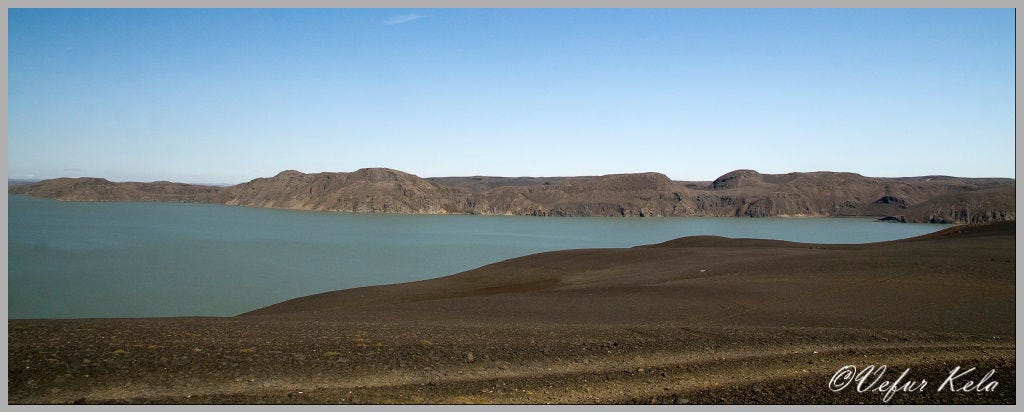
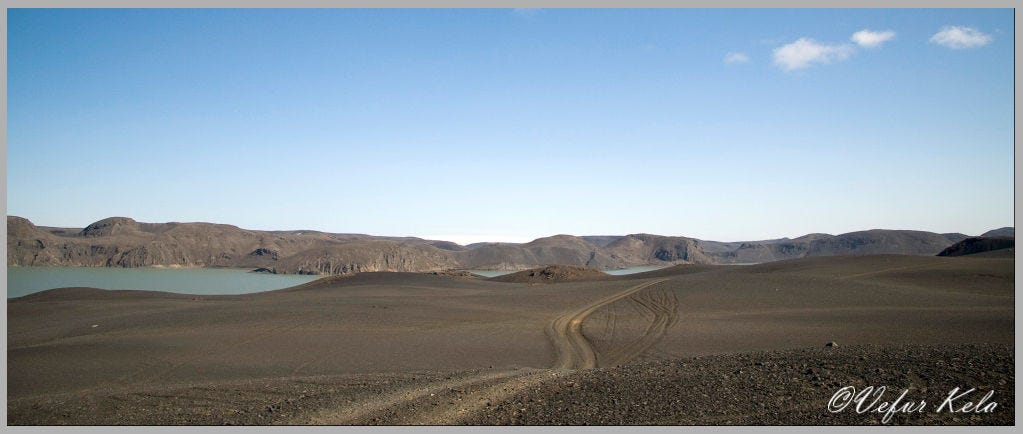
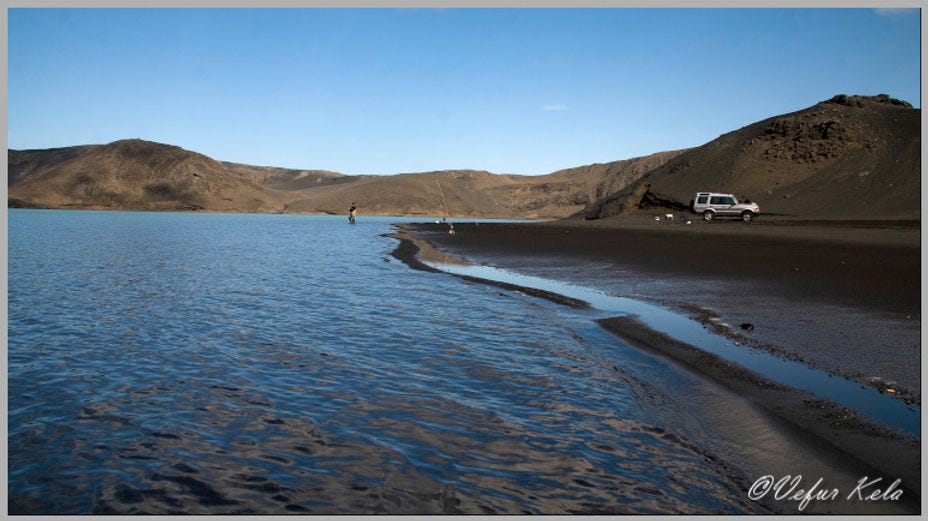
Þórisvatn is on Holtamannafrétt and is considered either the largest or second largest lake in the country, depending on what is being measured. The natural size of the lake was about 70 square kilometers, but now the lake is a water reservoir for the Búrfell Power Station, and the size fluctuates from being 83 square kilometers up to 88 square kilometers. The environment around the lake is probably not unlike the landscape on the moon. Sand and more sand, and not a stinging blade of grass anywhere. Perhaps this description is not exactly in accordance with the main ideas of natural beauty, but the screaming wasteland is beautiful in its rawness. In the evening sun, the beauty is undeniable as its rays dance with the shadows in the bare slopes of the mountains.
In the past, the lake was supposedly known for large trout, and in the accounts I found about the lake, the common size of the fish is 1.5 to 3.5 pounds, which is a decent size. It reportedly does not get much larger than that because then it would need access to larger food sources, like three-spined sticklebacks and such. The fish that is in the lake is said to be excellent food fish, deep red in the flesh. Until the middle of the last century, people believed the lake to be fishless, but decent spots were found in the innermost part of Austurbotn, which is south of a massive headland, Útgönguhöfði, that divides the northern part of the lake in two. According to our sources, it is most promising to try fishing from a spit that extends far out into Austurbotn, about 7-800 m before reaching the bottom of the bay. We were also pointed towards trying near cliffs that are approximately in the middle of Austurbotn, where it is slightly deeper. The third place we were pointed to is under cliffs on the northern bank of Austurbotn.
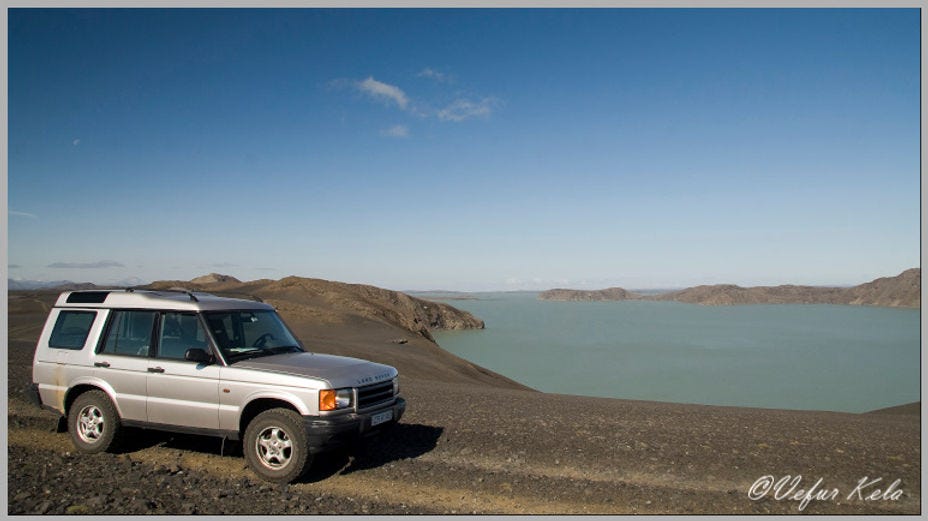
When we arrived at the lake, there were fishermen at both of these locations, so we planted ourselves on the south side of the bay and began fishing. The weather was good. A bit cold considering it was past the middle of June. Temperature 7–10 degrees [Celsius], a breeze, and bright sunshine. I saw the sand whirling around on the slope above and thought that I would not want to be there if the wind picked up seriously. Soon we hooked a fish, but we felt the fishing was too quiet. When the fishermen by the cliffs planned to move, we decided to try our luck where they had been. We had just set ourselves up when we saw that the fishermen had completely stuck the car in the loose sand, as they were towing a trailer tent behind them. I would not advise anyone to drag a trailer tent down there to the lake because it acts like a plow in the sand. There was nothing to do but try to pull them up, which succeeded after a bit of a struggle and with the help of the fishermen on the spit. Both the men on the spit and those stuck in the sand had a great deal of experience fishing in the lake and testified to better fishing than was had this day; both testified to larger fish and more of them. In my opinion, the fishing needs to be considerably better to justify a 4,900 króna fishing fee for trout fishing in a lake.
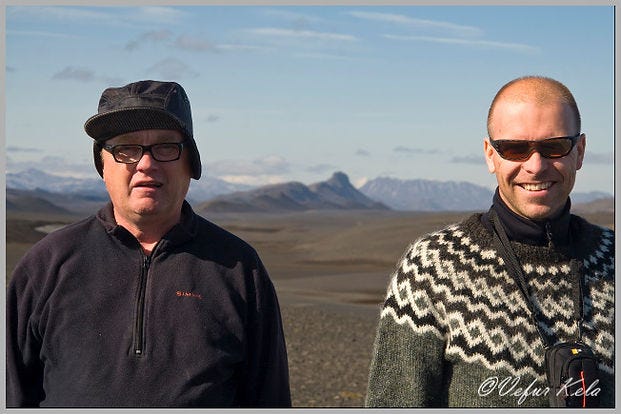
The result of the trip was nineteen trout shared among three fishermen. The largest fish was two pounds, but the others were perhaps just over a pound. The fishing method was not the most exciting. A dropline, hook, and worm as bait. This was hurled out, and then you sit on your ass and wait. If you want to get a fish, you pour coffee into a cup because the fish seems to sense it and rushes onto the line just when you want some peace. The trout in Þórisvatn also took a spoon lure. We did not try casting a fly, as stories say it is difficult to get them to take a fly there. It would be interesting to hear if it is possible. It is unclear what caused such sparse fishing, but the experienced guys who were there believed that there was too much water in the lake, the water was too colored, and that it was too cold. In fact, one of them said that the fish was getting smaller, and then the question is what causes that? Is there less food? Is the lake overpopulated? Who knows?