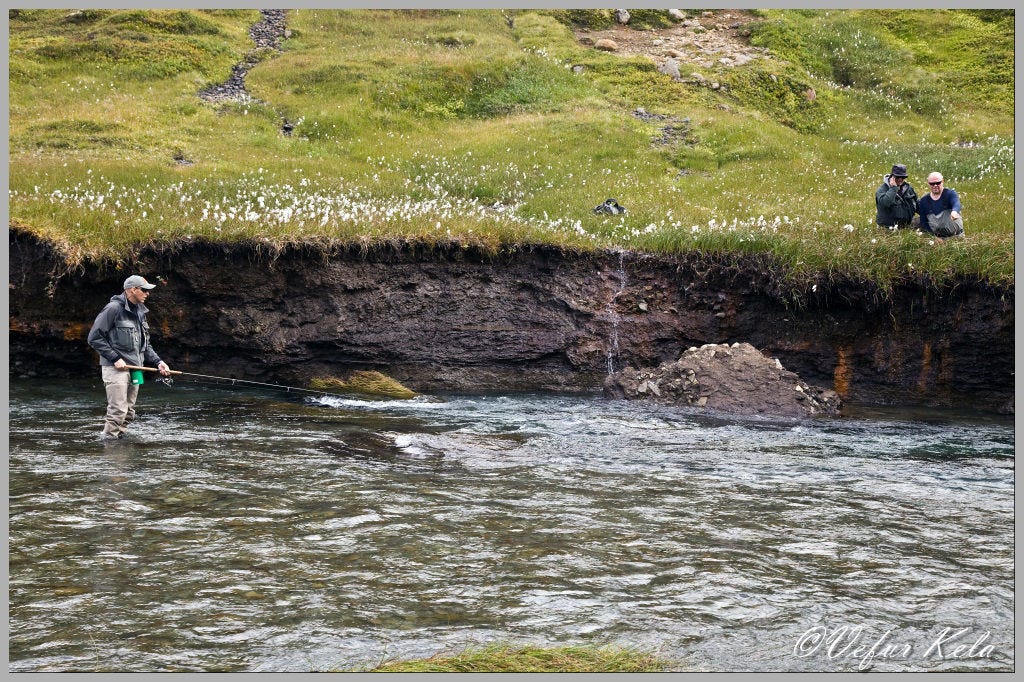
The catchment area of the Selá in Steingrímsfjörður is enormous, so when it rains, the river swells rapidly and can even become unfishable. That was not the case, however, when the woodworking club of former and current teachers from Grandaskóli made a trip north to Strandir to fish the Selá.
The weather was fantastic and the water level in the river was good. Members of the club have fished the river several times, and conditions have been quite varied on those trips. The same can be said for the results. Occasionally we’ve managed to hook a salmon, but club members seem utterly incapable of finding Arctic char in this legendary char river.
About three months ago, the Selá experienced unprecedented flooding; Selárdalur looked like a fjord. One naturally wondered if flooding of that magnitude would have a negative impact on the fishing. The logbook in the fishing hut gave little cause for optimism. Only five salmon were recorded and well under a hundred char. Was the logbook being kept correctly? We could at least console ourselves with the fact that all conditions were ideal, and we planned to indulge in good food and drink. There was at least that to look forward to.
The Friday morning shift then dashed all our hopes. We didn’t see a single tail. The outlook was grim, but we decided to check if there was any fish in the upper part of the river. We drove a treacherous track as far as the Land Rover could go and then hiked further up along the river. One of the principals and the PE teacher spent the entire shift walking as far into the valley as time allowed. All their effort yielded nothing, and they returned exhausted and empty-handed, convinced the river was practically devoid of fish. Everywhere were signs of the spring floods. The river was transformed in many places, and the brushwood lay flat, pushed far inland by the raging torrents. When they returned, the IT teacher was waiting for them, and he had been no more successful—though he did tell a story of a small salmon that the other principal had lost. Now it was time to head back. That principal was waiting a bit further down by the track. From a distance, he looked helpless, exhausted, and just as fishless as the rest of us. That turned out not to be the case, for in a pool beside him lay a ten-pound hen salmon.
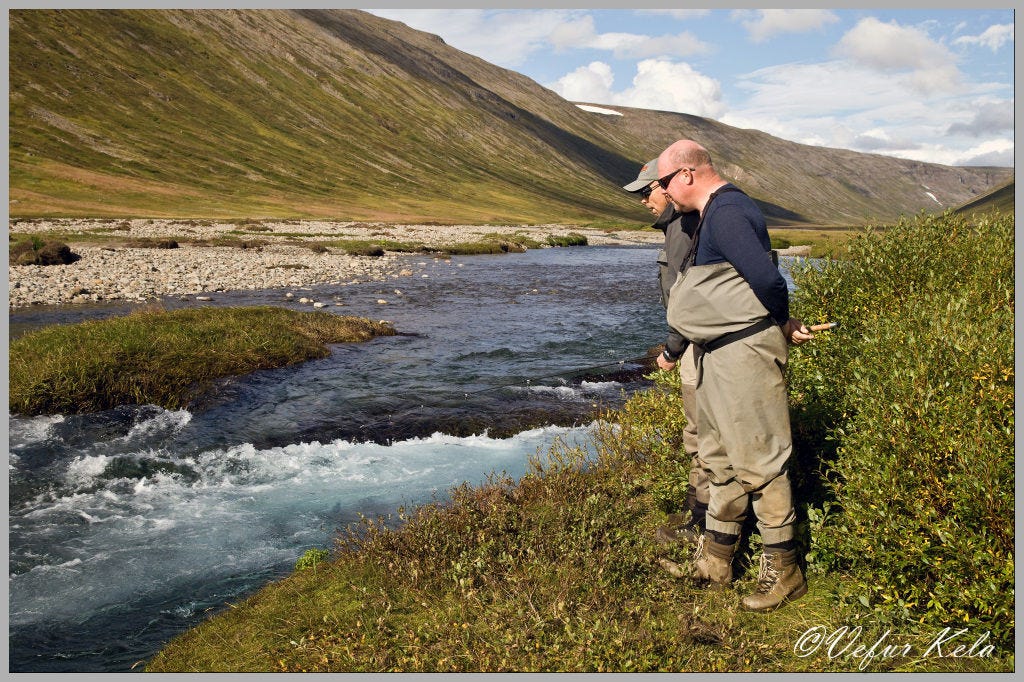
That evening, we decided to try again the next day at the two spots where we knew fish were lying. At the upper spot, there were two fish, but they were not willing to take the fly. May they live well. At the lower spot, called Dimmubakkar, there were likely several salmon. During the morning shift, the principal who had hiked the valley managed to land a five-pound cock (male) salmon, and the IT teacher hooked a stout salmon that snapped the line.
During the second shift, we cast again into Dimmubakkar. A large salmon took the PE teacher’s fly, and he had to work incredibly hard to get it toward the bank. Only the final touch remained when the ‘shameful’ salmon tore itself loose and swam away. Shortly after, the IT teacher hooked another salmon that struck vigorously; he landed it as if it were a tiny char. This fish turned out to be a solid nine pounds. And we must not forget the only fly-caught fish of the trip. It was a char—yes, the woodworking club’s very first Arctic char in the Selá. It was caught in Hermannshylur and weighed a grand total of 300 grams. It was released.
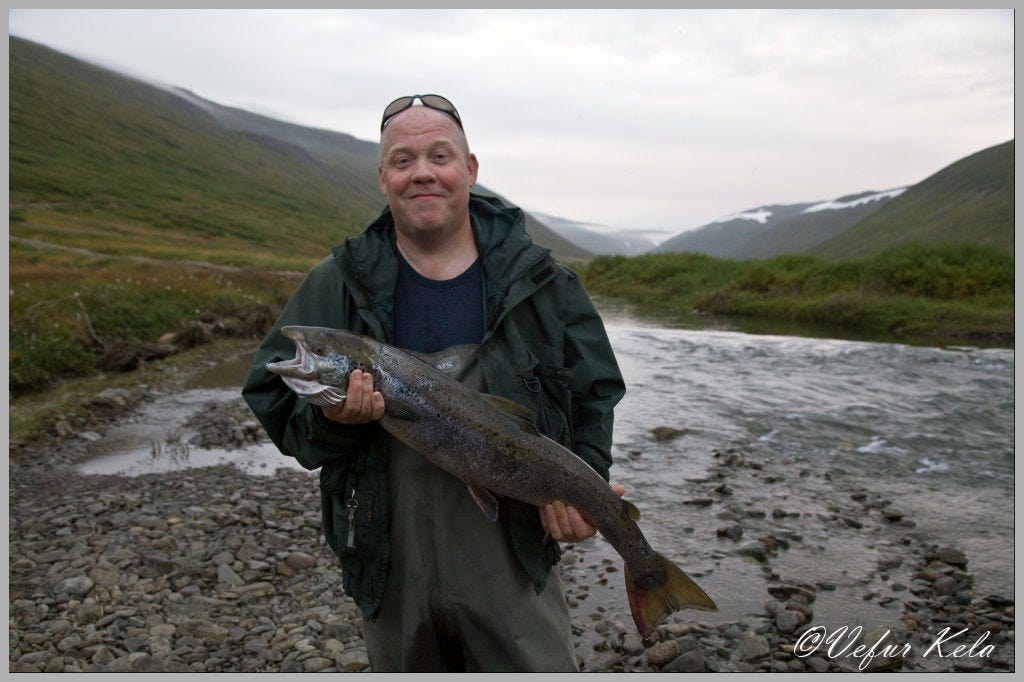
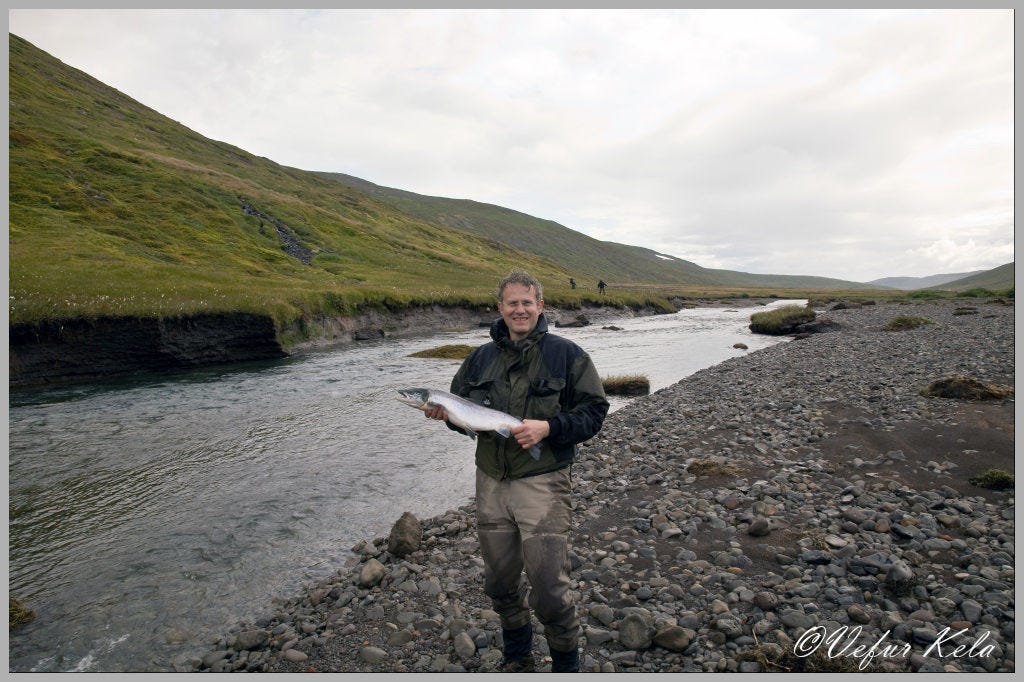
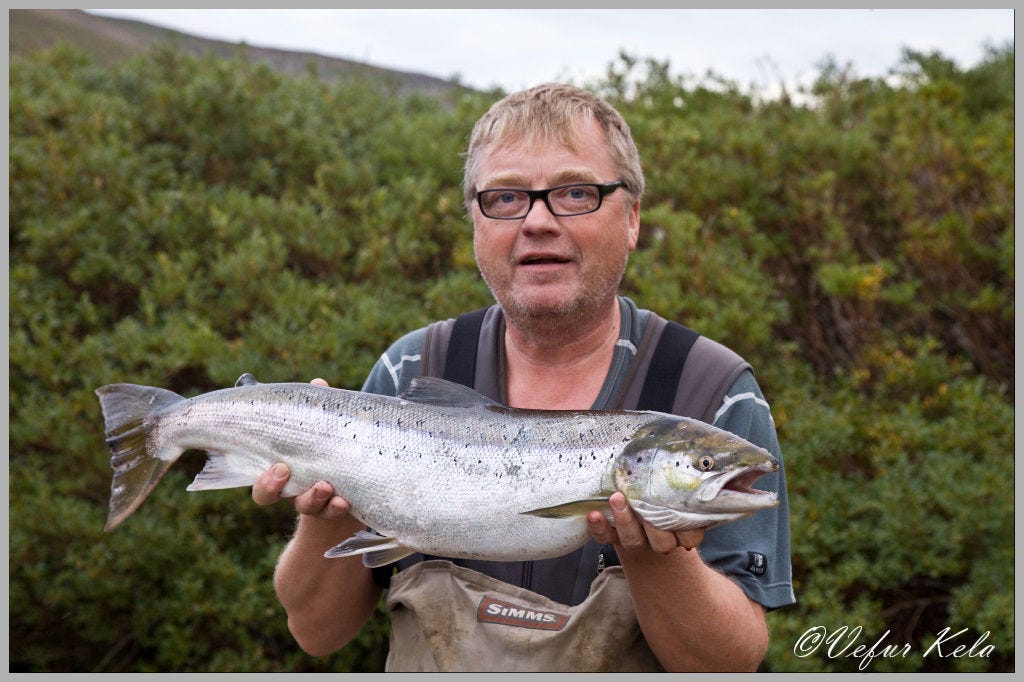
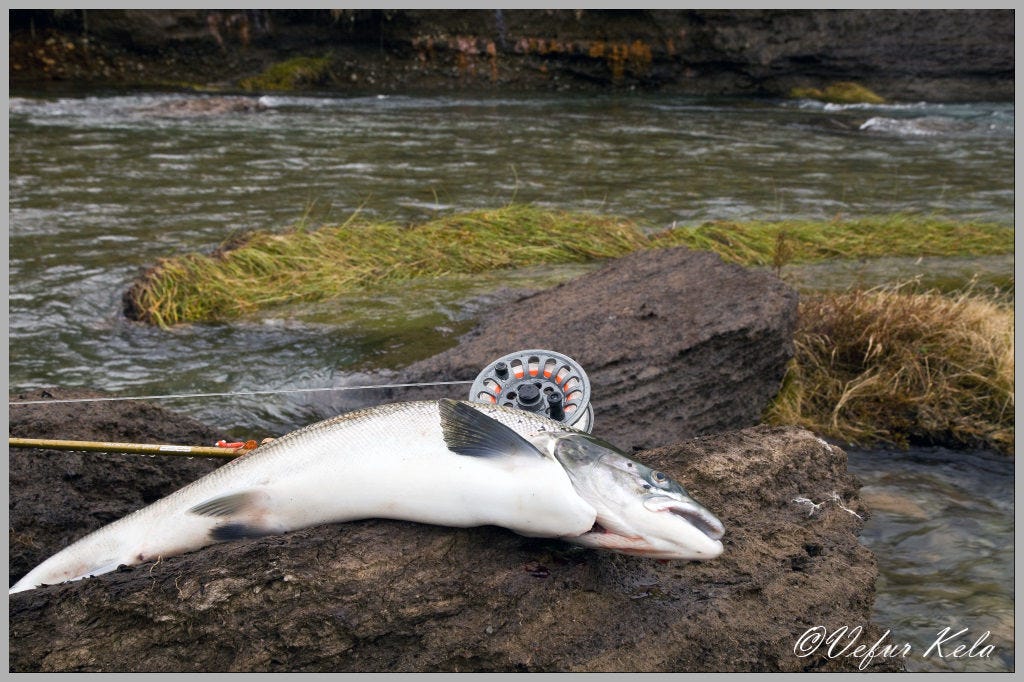
I don't think many fish have entered the Selá yet. Thanks to the eagle-eye of the other principal, some fish were eventually found, and thanks to his skill in 'sight-casting' (drifting) the bait right to the fish, six salmon ran onto the line. By Sunday morning, however, a torrential downpour had arrived, and it was surely no longer safe to drive up along the river as we had done in the fair weather of Friday and Saturday. The Selá had likely become unfishable by the time we drove into town.