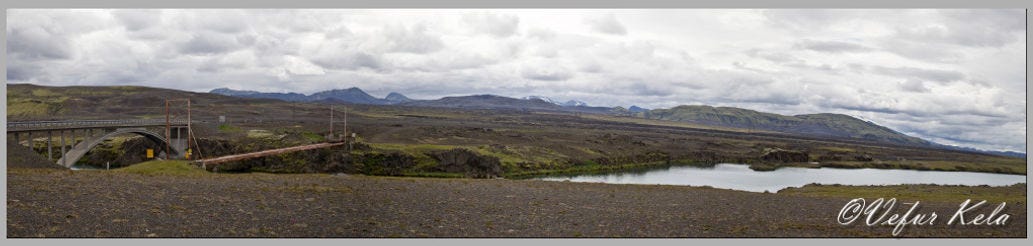
The newest is Sporðöldulón, which began filling in the summer of 2013. The river Tungnaá flows out of Sporðöldulón, and Kaldakvísl flows into it. There are local populations of Arctic char and brown trout in both Tungnaá and Kaldakvísl, but when Sporðöldulón was formed, conditions changed such that the confluence of the two rivers no longer exists; the junction was roughly where the dam that forms the lagoon now stands. This must have a significant impact on the fish stocks there, which can be read about in more detail in the report from the Institute of Freshwater Fisheries. It stands to reason that there must be some trout in Sporðöldulón, given that Tungnaá flows out of it to the south and Kaldakvísl flows into it from the north.
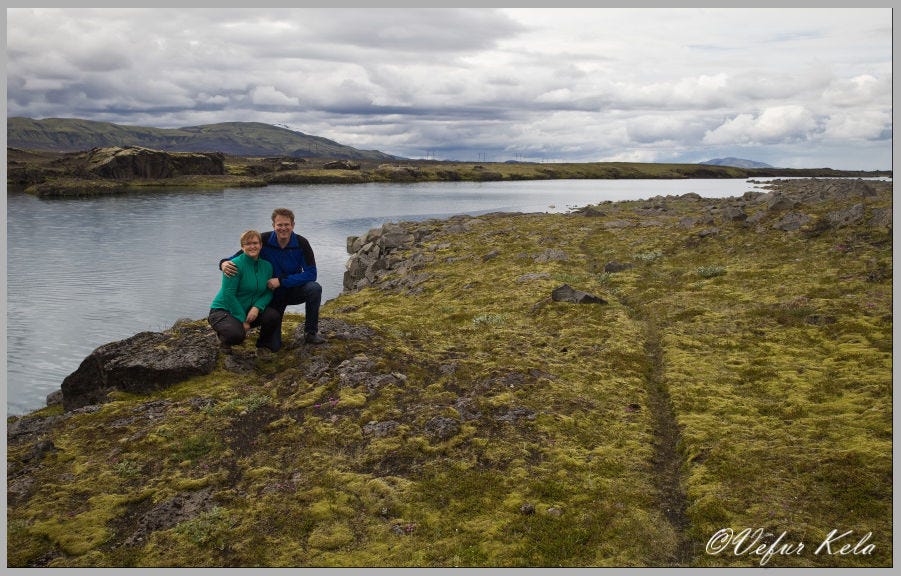
The fishing club ‘Better a Small Fish Than an Empty Plate’ decided to put this to the test on Saturday, July 12th, 2014. The weather was good—about 12°C, dry, and with little wind. We drove to the northern end of the lagoon where Kaldakvísl flows into it. We thought it most likely we’d find fish there at the far end, if any fish were to be found in the lagoon at all. There, we met the leaseholder of Kaldakvísl, who informed us that those fishing in the lagoon are not permitted to fish in the ‘seams’ (confluence) where the river meets the lake. According to what he told us, 90% of the fishing spots in Kaldakvísl were lost when the lagoon was formed. This will presumably require significant creation of new fishing pools further up the river.
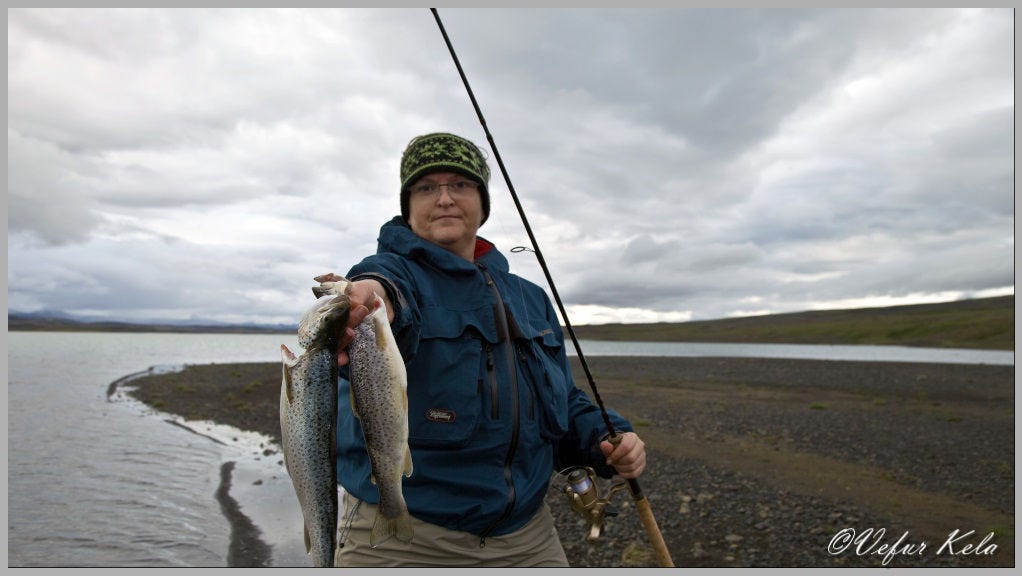
So, the question is: was it worth making this attempt? No, one can hardly say so. During this half-day, only two brown trout 'ran onto the line' (were hooked) by my wife—one took mackerel and the other a worm. Of the five anglers who tried their luck, she was the only one to notice any action at all. After this fishing trip, one wonders if it isn't too early to be selling permits for this new lagoon.