The Lake on the Moor
We would never have chosen this day for fishing, had we been given the choice.

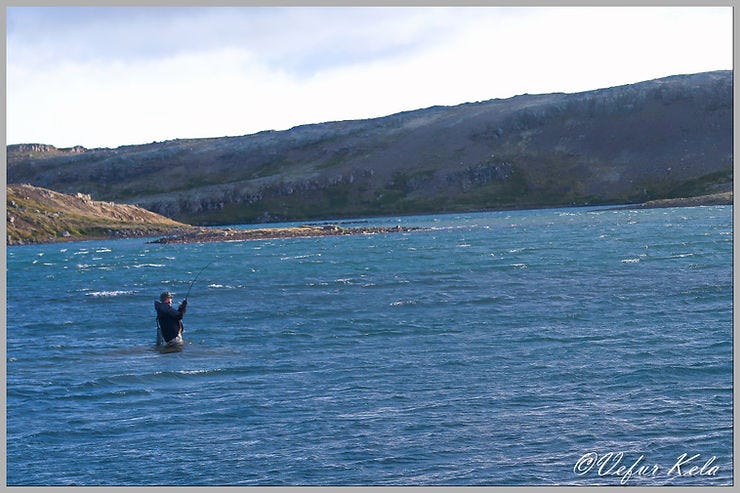
If we could have chosen a fishing day at our moorland lake, we would never have picked this one. There was a stiff northeasterly breeze, and the temperature was only 8°C. The conditions were far from ideal, but we persevered because we didn’t have another choice—if we didn’t go this weekend, there was no certainty we would make it to the lake at all this year. Upon arrival, the wind was gusty, and the lake was choppy. Eight swans scrambled loudly toward the safety of the water when we appeared above the bank where they had been grazing. Just like the river down in the valley, the lake’s water level is at a historic low, as there hasn’t been any significant rain since May.
We walked east of Grunnuvík, intending to fish from the eastern bank heading north. On that side, the wind wasn’t directly in our faces, allowing for decent casting distance. I was hoping to use my fly rod, and we started at a spot that had yielded well last year. However, fly casting proved difficult. The wind was so strong that the slack line blew about, frequently tangling. When it wasn’t getting caught on the net—which kept swinging in front of me—knots formed in the fly line, ruining the casts. It was so frustrating that I eventually gave up and followed my wife’s lead: I switched to a lure, which worked as long as it was heavy enough.
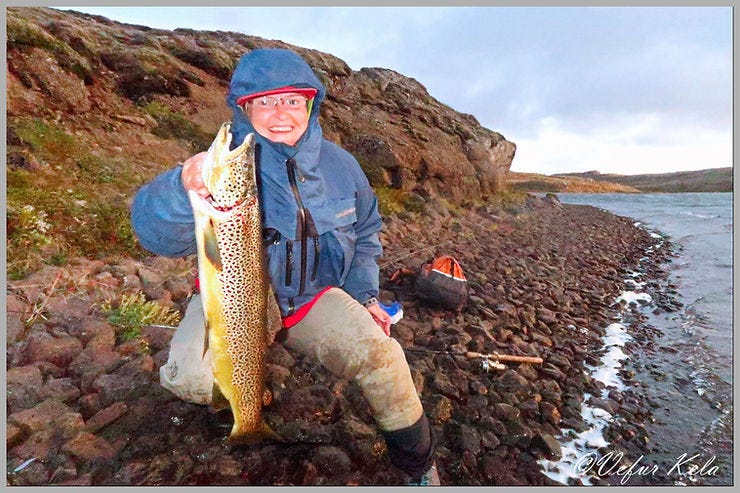
Soon after, I saw my wife land a one-pound brown trout, and shortly after, I caught a two-pounder. We decided to fish our way north along the bank and had just started when my wife mentioned she had lost what she thought was a large trout. She cast again. The trout was aggressive and struck the lure once more. This time, she managed to land it, and it weighed three and a half pounds. We continued further north, and I landed two more fish, both around two pounds.